
Winter on the Waterfront: Dunkirk’s Emerging Sports Identity in an NHL-Obsessed Region
Trending
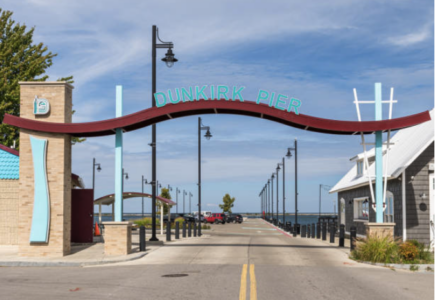
Stand on Dunkirk's pier in January and you'll feel the kind of wind that stings your eyes and makes the horizon blur into pale ice. That same horizon, on a clear day, stretches toward Buffalo, a city where hockey is less a pastime and more a language. Dunkirk, tucked along Lake Erie about 45 miles southwest of Buffalo, lives in the orbit of that hockey-mad culture. Yet, something is stirring on its waterfront, a shift toward a more layered sports identity that stretches beyond the rink. In a region obsessed with the NHL, Dunkirk's quiet evolution suggests that a smaller community can still shape its own athletic voice.
Historically, Dunkirk's sporting life has been defined by its scale; the city of roughly 12,000 residents has relied on local schools and community recreation to carry its athletic traditions: high school teams, youth leagues and informal lakeside games have formed the backbone of participation. However, as neighboring cities build sports complexes and regional tournaments grow more ambitious, Dunkirk's question becomes sharper: can a town so close to Buffalo's hockey fever use its own geography (its harbor, its schools, its cold) to create something new, distinct and proudly its own?
Local Sports Roots and Infrastructure
If you look at the city's high school sports calendar, you see a healthy mix: basketball, soccer, wrestling, tennis, track and swimming all make appearances. The diversity of offerings gives local students a chance to test their skills across multiple disciplines, rather than being funneled into a single pursuit. Meanwhile, the Department of Youth and Recreation continues to expand community leagues that keep kids and adults active during the long winters. It's an organic approach to building participation: simple, accessible and rooted in local enthusiasm rather than grand infrastructure.
Around the lakefront, the city's redevelopment plans hint at bigger ambitions. Dunkirk's shoreline is central to revitalization efforts, with talk of public spaces designed to blend sport, tourism and waterfront culture. In warm months, the harbor buzzes with sport fishing and boating. The colder season, however, leaves the waterfront underused; a reality that city planners have started to notice. With proper investment, the same lake that draws anglers in July could host outdoor ice events, skating festivals or even community hockey tournaments in January. The physical ingredients exist; the question is how to bring them to life.
Between Frozen Ponds and the Sabres Fandom
Western New York's devotion to the NHL is legendary, with Buffalo's Sabres sitting squarely at the center of that storm. For decades, fans across the region (including plenty in Dunkirk) have marked their winters around the team's ups and downs. It's the kind of passion that seeps into everything: radio talk, coffee shop debates, even the way kids choose what sport to play. Dunkirk shares that loyalty, but it's also learning to give its own athletes more room to explore.
You'll hear it in local conversations: how the Sabres are doing, who's getting called up from Rochester or even how to bet on hockey the easiest way when someone's feeling bold after a good game. It's the casual talk of a region that breathes the sport. Still, there's more happening beneath that chatter. Coaches are introducing winter cross-country programs, parents are organizing curling nights and kids are taking to the ice on the small ponds near Chadwick Bay. The town's love for hockey remains, but it's being joined by a broader appreciation for what winter can offer: different rhythms, new traditions and a stronger sense of local identity.
Winter Culture, Waterfront and Sport Activation
Once winter grips the lake, Dunkirk's waterfront feels both serene and full of possibility. The same docks that host summer festivals could easily transform into skating paths or curling lanes. Locals have floated ideas for winter markets, snowshoe races and "frozen music nights" that blend sport and culture. You can imagine strolling along the harbor as kids play pick-up hockey while food stalls serve cocoa and soup, in a tableau that feels equal parts small-town and cinematic. Such visions have real economic weight, too. Recreation and tourism are already pillars of Western New York's development strategy, with winter events potentially turning a quiet season into a signature draw
Community identity plays a major role here: residents have recently discussed new signage and branding that highlight Dunkirk's uniqueness rather than its proximity to Buffalo. A stronger civic identity would make it easier to secure grants, attract sponsors and build pride in new athletic programs. Weather will always be a variable, with some years delivering thick ice and others milder cold, but adaptive planning (using both indoor and outdoor options)keeps enthusiasm consistent. Even modest changes, like portable rinks or seasonal festivals, can give people a reason to gather when the lake freezes.
Toward a Resonant Sports Identity
Walk the streets of Dunkirk in midwinter and you'll sense both resilience and anticipation. You might pass a gym echoing with basketball cheers or see kids jogging along icy sidewalks in school colors. The foundations of a sports culture are already here; they just need focus and investment. Developing a small indoor rink, perhaps through regional partnerships, could serve as a cornerstone. From there, the city could host annual tournaments, community leagues and waterfront events that bring together families, visitors and local businesses.
There's room for creativity, and you can feel it taking shape: picture a "Winter Waterfront Week" where you could skate, listen to live music and grab coffee while the lake freezes behind you. Events like that would give Dunkirk's shoreline real energy and offer locals a reason to get outside, even in the cold. Tie those moments to tourism and the city's identity strengthens, built on its waterfront, its close community and its love of winter. Western New York may revolve around the NHL, but Dunkirk's charm is different: smaller, closer and unmistakably its own.
Key Takeaways
Each blade mark on the ice, each echo of a puck against a wooden board, would tell a story of persistence and reinvention. Dunkirk's evolution does not reject the region's hockey heritage; it reframes it. When winter settles in and the lake stiffens under frost, you can picture the scene: laughter cutting through the wind, music spilling from the pier and a town finding its rhythm at last. That's how Dunkirk, nestled within an NHL-obsessed region, is quietly writing a winter story all its own.