
Mayville debates water project costs
Trending
MAYVILLE -- As village leaders continue to debate the best option for water, one elected official expressed his concerns regarding costs.
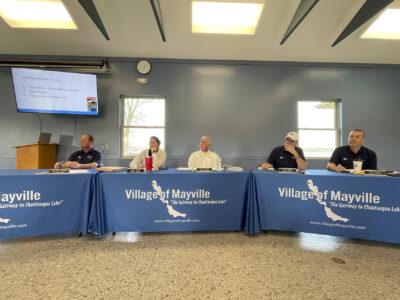
During a meeting of the Mayville Village Board, Trustee Mark Perry brought up the water project. "I have a very difficult time incurring more debt without being able to service the debt that we have," he said.
In February, Matthew Zarbo with Barton & Loguidice discussed options for Mayville's water system.
To do all the necessary improvements now, it would cost $7.6 million. Zarbo noted a $2 million water grant the village was awarded last year is still available. There is a $500,000 match required, although the village is trying to get the match requirement waived.
Zarbo said at that meeting he believes the village would be eligible for a grant of $3,920,000 as well as a $1,680,000 zero percent interest loan.
Last week, Perry said the village could look at doing the water project in stages.
Department of Public Works Director John Buxton said they need to replace 26,350 feet of waterlines.
Dan Engdahl, chief water operator, said the problem is the waterlines can't sustain additional pressure. Even if the project is approved, it would take multiple years to install anyways.
Perry agreed that it costs more if the work is done in phases because contractors can lower their price once they have all their equipment in place, instead of making multiple visits. At the same time, Perry doesn't want to overburden residents with water rates.
"I'm trying to use good governance, in the fact that we're not just going to spend money out there willy-nilly," he said.
It was brought up that the village must spend around $30,000 on attorney fees for bonds to finance the project. If the project is divided up into three stages, they would be spending $90,000 on attorneys fees.
At a special meeting May 1, the village board passed a resolution to spend $15,000 on a low income survey.
Mayor Rick Syper said they wanted to do the survey because there was concern the village's income may be too high to get the $500,000 match for the $2 million grant waived. The state believes the village's household income is around $75,000, where it was $60,000 in the past.
Perry said if the surveyor is able to show the village's income level has not gone up over the past two years, they will be eligible for grants.
"It's more money that we had to spend, but I think it's very well spent. It's going to be 20 to 30 times that in our investment getting it back," he said.