City eyes beachfront stabilization
-
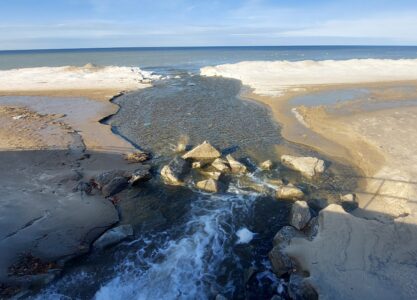
- OBSERVER Photos by M.J. Stafford Hyde Creek where it runs into Lake Erie, adjacent to Wright Park Beach in Dunkirk.
-
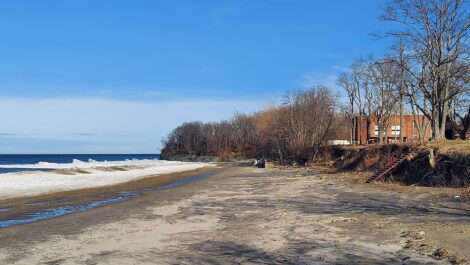
- OBSERVER Photos by M.J. Stafford Wright Park Beach in Dunkirk, with the city sewage treatment plant looming on the bluff above.
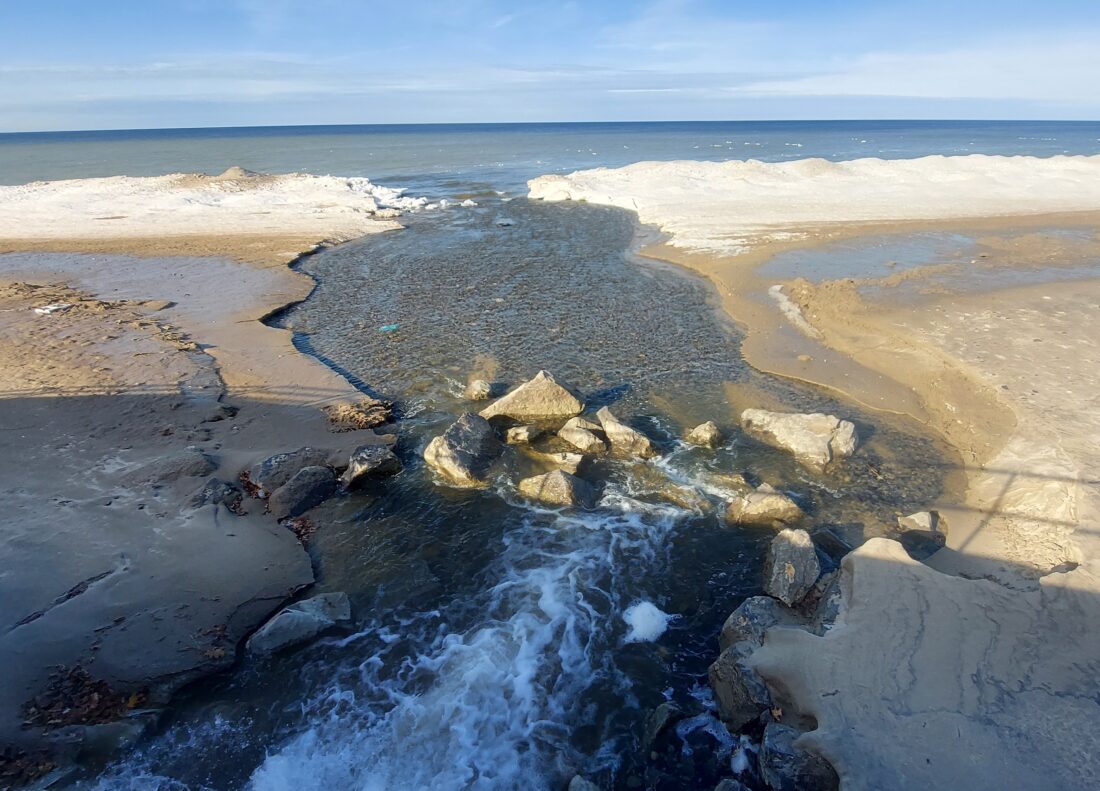
OBSERVER Photos by M.J. Stafford Hyde Creek where it runs into Lake Erie, adjacent to Wright Park Beach in Dunkirk.
A city of Dunkirk beachfront stabilization project is reaching out to the public.
A recent presentation to the city council’s Economic Development Committee explained the project’s erosion studies, and possible steps in protecting the shoreline.
Michelle Platz of LimnoTech offered the presentation. LimnoTech is an engineering consultant on a Great Lakes St Lawrence Cities Initiative team studying erosion at Wright Park. The study is funded by a federal grant.
“In the process of the project … we really need the community to give us guidance on two points specifically,” Platz said. The points are really questions: The first is, “Where should Dunkirk’s public beach go?” The second is, “What options should we use to protect Lakefront Boulevard from Lake Erie’s battering?”
Project planners want to work with the community to develop a “lakefront framework plan.” Platz said planners must make sure whatever is designed for Wright Park — a focus of stabilization efforts due to the beach and the adjacent sewer treatment plant — doesn’t have negative consequences elsewhere along the waterfront.
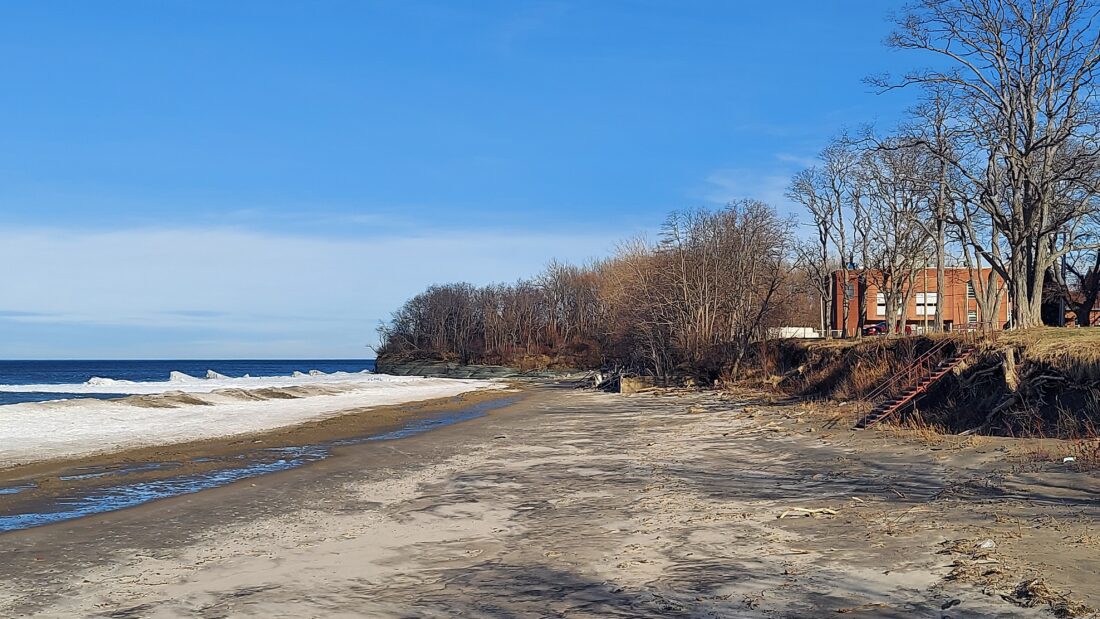
OBSERVER Photos by M.J. Stafford Wright Park Beach in Dunkirk, with the city sewage treatment plant looming on the bluff above.
The study has included water circulation modeling to find out where Lake Erie batters the waterfront most. Planners must account for water surges and seiches.
The bluff at Wright Park beach, however, “is the big reason we got involved,” Platz said.
She showed photos taken by a nearby resident of significant erosion at the bluff between 2019 and 2023.
The erosion is a danger to the sewage plant above. “We want to make sure infrastructure is protected from these huge forces on the lake,” Platz said.
Erosion was “far and away” the biggest concern in an August public survey conducted by LimnoTech, she said.
Another focus of waterfront protection is Lakefront Boulevard, which connects Wright Park and Main Street. Storm surges and ice batter the road every year.
Platz laid out three possibilities for the site of Dunkirk’s official public beach: Keep it at Wright Park, “scoot the beach over a little bit” to the west of the park, or move it down to the foot of Main Street near the Steger high-rise.
If the beach remains at Wright Park, it will shrink a little due to bluff stabilization efforts, she warned. However, engineers could construct an extension of Hyde Creek’s outflow to build up more beach.
A Main Street beach “would disconnect from Wright Park” and cause planners to “rethink the beach grooming plan” for the park, she said.
Platz said it is essential to find out which of the three beach options local residents prefer. “We are relying heavily on feedback from Dunkirk residents” in project design, she re-emphasized.
Platz then flashed some options for shoring up Lakefront Boulevard. Two of them involve offshore breakwaters, but the third would be a radical redesign of the thoroughfare: It would be shut down for automobiles and turned into a green space with a promenade-like strip. Platz said that final option would cost the least — but “we know the Dunkirk community loves to cruise Lakefront Boulevard.”
Platz said LimnoTech wants to hold its next formal community engagement effort sometime in the spring. Natalie Luczkowiak, the councilwoman who chairs the Economic Development Committee, offered to help advertise it.
Vince DeJoy, planning and development coordinator for Dunkirk, said the designs and concepts will help the city apply for funding. Grantors want to see such things before offering money, he said.
DeJoy admitted, “We don’t have the financial wherewithal to do these projects.” The city famously faces severe budget problems that led to state intervention.
However, “We won’t just say, ‘Let’s see what happens,’ because it could be disastrous in a big way,” DeJoy asserted.