Borrello pushes NRG repowering
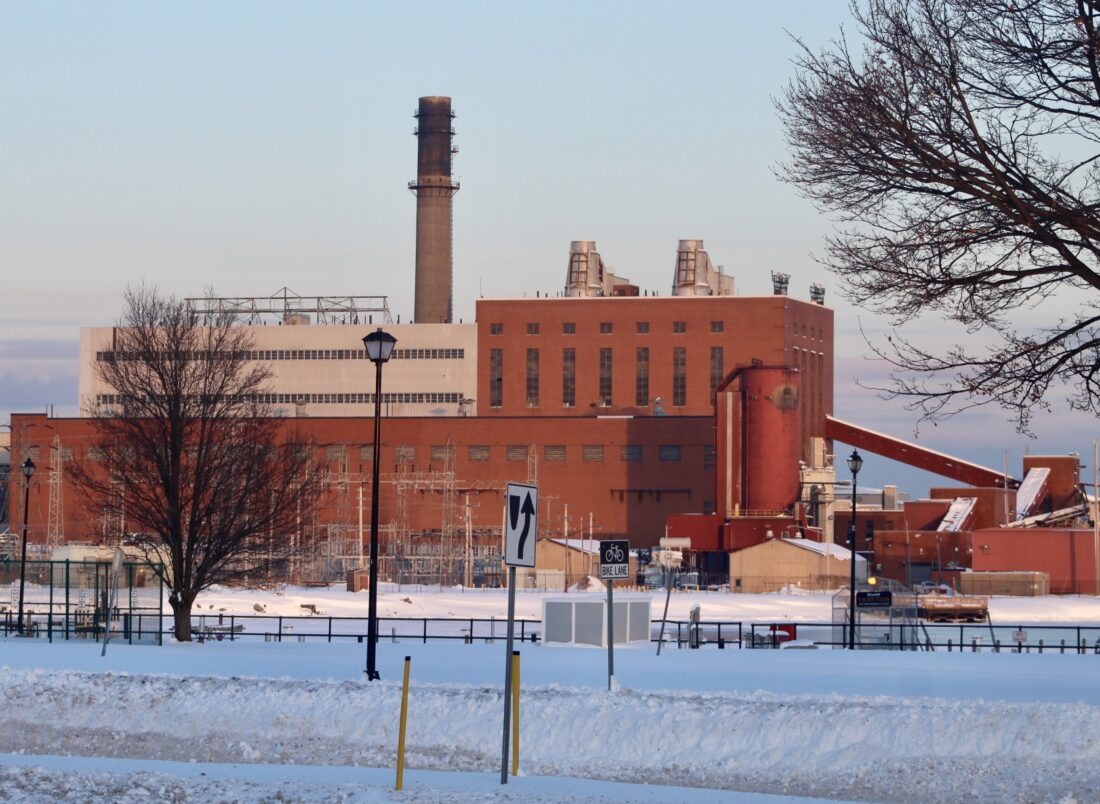
OBSERVER file photo The power station on Lake Erie, owned by NRG Energy Inc., has been mothballed since 2016.
State Sen. George Borrello didn’t let an opportunity pass to lobby state energy policy makers to repower the NRG power plant in Dunkirk.
Borrello, R-Sunset Bay, had recently penned a guest essay for The Post-Journal and OBSERVER calling for the mothballed Dunkirk plant to be repowered with natural gas. Borrello had also supported repowering the plant with nuclear power when Gov. Kathy Hochul said this summer she wanted to build a new nuclear plant somewhere in upstate New York.
Borrello pressed Doreen Harris, NYSERDA chairwoman, and Rory Christian, chairman of the state Public Service Commission, during a recent joint legislative budget hearing about possible changes to the state’s energy policy while pushing for activity at NRG.
“First of all, thank you all for being here,” Borrello said. “I also want to compliment all three of you. You are trying to bring common sense to what is otherwise a nonsensical energy policy in New York state.”
Borrello then asked Harris about the state’s Draft Energy Plan that signaled an all-of-the-above energy policy that includes natural gas.
The energy plan approved in December does include investment in renewable energy while also noting that a variety of energy sources, like advanced nuclear and natural gas, will be needed to help New York meet its overall energy needs over the next 15 years.
“You’ve said we have to have a balanced portfolio, and that we have to allow time for any transition,” Borrello said. “You just mentioned 10 years or more for a nuclear power facility. I represent Dunkirk, economically devastated by the closing of its power plant, meanwhile we’re importing more power than we ever have – old-fashioned dirty coal plants in states like Pennsylvania and Ohio. Why can’t we just repower these facilities like the Dunkirk NRG plant with natural gas with a goal of maybe 10, 20 years down the road, whenever there’s a payoff, and then go to nuclear once we can actually have small modular reactors? … We need a real plan. We need power right now.”
Harris said she appreciated Borrello’s mention of the state’s Draft Energy Plan, which does include retaining existing fossil fuel assets between 2026 and at least 2040 and possibly longer. Some fossil fuel assets may need to be repowered in the future – though Harris said location is important.
“Depending on utility’s zone, which is very important, the physical location and the need, there may need to be new construction as well,” Harris said. “We focused on Zone J in the state Energy Plan, which is New York City, with respect to near-term needs that may exist in that category. But from a utility planning perspective, certainly to (Public Service Commision) Chair (Rory) Christian’s point, this is on the table for utility planning as well.”
Christian reliability of the power grid is the most important consideration for the Public Service Commission, which is working with the state Independent System Operator to identify reliability needs. The ISO recently released its fourth-quarter STAR report, which assesses short-term reliability of the power grid. Consistent with the third-quarter STAR issued last October, the ISO assessment identified reliability violations in New York City and Long Island beginning in the summer of 2026. The violations are driven by generator deactivations, increasing consumer demand, and transmission limitations, ISO officials said, while reaffirming that delayed completion of new offshore wind projects could exacerbate the previously identified New York City and Long Island reliability violations.
The finding of a reliability need initiated a process administered by the NYISO to solicit solutions to bring reliability margins back to acceptable operating levels. The NYISO is currently evaluating the proposed solutions and will issue a Short-Term Reliability Process Report indicating NYISO’s selection of a solution or combination of solutions. That process is expected to conclude by April 2026.
“I didn’t mean to interrupt, but I’m short on time,” Borrello said. “Have they (the ISO) not said we are at risk of blackouts, rolling blackouts, essentially planned blackouts as a result of our lack of supply at this point.?”
Christian’s didn’t deny Borrello’s point.
“I can say with certainty that that is not what we plan to happen nor what we plan for,” Christian said. “We plan to avoid blackouts, brownouts and other …”
“It’s a possibility because of the lack of supply at this moment,” Borrello interjected.
“If conditions continue and we do not add sufficient generation and controls in our system, that is a possible outcome,” Christian responded.
TOP STORIES

Silver Creek to consider eliminating Planning Board

Schumer announces federal funding for Job CorpsSchumer announces federal funding for Job Corps
Mayor Wdowiasz seeks regional control board
Dunkirk Mayor Kate Wdowiasz criticized state lawmakers Tuesday for advocating a city financial control board. The ...
Borrello pushes NRG repowering

County furnace program helps keep seniors in their homes