
Trending
Over 40 years of songs.
Songs shaped by the grit, oil and steel of the Norfolk Western line. The lonesome whistle of the freight trains, the low subsonic rumblings as they passed his bedroom. All a stone's throw away. There was nothing beautiful about his neck of the woods. It was post-industrial. Worn out and forgotten. A perfect place to sing the blues.
This was Dunkirk. The working class town, where through hard sweat and labor a man could raise a family. For generations his family worked in those steel and locomotive works. But by the late 1970s Dunkirk had become a shell of its former self. And the great layoffs and plant closings began. Trained as a welder what could a young boy of nineteen do now? There were no jobs.
One day in the unemployment line Joel Maslakowski saw his uncles, cousins, fathers of his childhood friends, all lined up around the block in the pouring freezing February rain.
Standing there with two of his older brothers he had enough. This was hopeless. Later as he walked home through the city that urban renewal had destroyed he made a decision that would change his life. He knew it was crazy -- and he had vowed that he would never do it. But circumstances had changed and this looked like the only avenue of escape. The recruiters office. And there it was, all he had to do was walk through the door and there would be no turning back. And he did just that.
Twenty short days later he was standing at attention in Lackland, Texas, getting screamed at, and he smiled. Because he had that Dunkirk Grit, that scrappy hard earned immigrant work ethic in his blood. People from Dunkirk may be a lot of things.
But they're not quitters nor do they walk away from a fight.
In the end Maslakowski was assigned to Germany, and decided to engage in that culture and community where he now found himself. His co-workers stayed behind in their shielded Americanized base life. But not Maslakowski. He ventured out into this foreign world alone. And made it his own. Through all his new German friends he was introduced to experiences he'd never imagined. It was his college. But he was earning a degree in Life.
When he came back home to Dunkirk -- nothing had changed but he had. And he found it difficult to ever return to "what he'd been" as people expected him to. So, he quietly worked crafting his songs. Songs that were never heard because cover bands aren't allowed to play original music. He worked whatever dinky jobs he could find and struggled to earn a living. But the songs were in his bones. And that drove him.
Desperate to find opportunities, Maslakowski returned to Germany in 2000, and renewed his old contacts there and found plenty of work as a musician, songwriter, and producer. And then the Iraq War started and ... he was back in it. After working for the Department of Defense for three years he found himself deathly ill. And far from home. In the end, he was left 100% percent disabled by his time of service to his country, and the illnesses he suffered from robbed him of his ability to ever play music again.
In 2011, Maslakowski returned to the USA and found himself outside the Cleveland Clinic where he had gone for treatment under the direction of the VA. He stood there with 12 other veterans who had all just found out that the funding for their care had been axed and they were now literally thrown out on the streets. Homeless.
Luckily a young couple heard of Maslakowski's plight and brought him to their home in Michigan where he could stay until he found some accommodation, which thankfully he did months later. At a senior living home for the poor, Maslakowski's health worsened by the day until finally in October 2012 he was taken to the U of M in Ann Arbor where a team of doctors causally informed him he had one hour left to live. He was 50 years old.
St. Mary's for some was a hard education. Catholicism is a strict religion for children. Maslakowski was the only one of the family's six children not to attend. He went to School 4 instead, so he was spared the catechisms but not their rod. Back in those days there was a thing called religious instruction and public schools. Youth walked down those long blocks each week to seek their salvation.
Somehow enough of that must have seeped through, as miraculously, Maslakowski was literally saved at the last minute by divine intervention. He was saved, but not before his body now had no working adrenal glands, pancreas, thyroid, and he was left paralyzed from the waist down. But he was alive -- for now.
Dumped back in the senior home, Maslakowski languished for years trying desperately to regain his mobility and frankly just survive from day to day. Luckily through Dunkirk Facebook friends like George Corsoro, he was helped to file for his VA benefits that he had been fighting for. Thanks to Corsoro's help in 2017 he was finally able to get his VA disability and get out of social housing and buy a place of his own.
During all these years of recovery Maslakowski required 24/7 in home health care. His nursing angel eventually (and it was her choice) married him and they bought a small house in the same town as his wife's daughter, and grandchildren. She was an angel in all things but moving back to Dunkirk was not one of them. And the Music?
It was still singing in his bones -- but now it just stared back at him as MP3 Files on
A hard drive.
For years the doctors looked at Joel and couldn't figure out how he managed to still be alive. Since that stint in the hospital in 2012 Maslakowski went on to have at least nine documented heart attacks, two strokes, many seizures, and here he was. Defying the odds over and over. Dunkirk grit. The oil and grease of the city. It's his blood. And he was determined not to leave quietly.
Finally this February, he'd had enough. The bones were singing. The songs needed to be released before his demolition car body quit at the fairgrounds. But how could he do this? Artificial Intelligence. A Digital Band. His own session musicians. He had the music. Just not the players. And so it began.
One month later after working endless hours he ended up with albums worth of material. His Anthology. Forty-plus years of demos brought to life, each song based entirely on his original works. His musical prosthetic or "wheelchair" enabled him to fulfill his lifelong dream. And the bones stopped singing.
Maslakowski uploaded his works to the streaming platforms and thought he was done. Who would notice his albums? He wasn't even on any social media. And he made no effort to promote them. And then came an email, and then a phone call, and then someone from a publishing house in Nashville? They'd all heard his songs. And then the impossible happened. A simple email came from Joel's Record Distributor who told him, "Congratulations! Your albums have been picked up by iHeart Radio!"
"Imagine. You're 64 years old," Maslakowski said. "A nobody -- washed up, down for the count, and merely lucky to be alive. And this happens? Wow. But, nothing changes. His dogs are not impressed. And life goes on as it did before. Quietly. The Dunkirk way. We didn't need much growing up in this city. We had each other, our families and friends. We knew that was what was important. It still is. Thank you Dunkirk for making me, and giving me the songs in my bones, which now a whole world can share, and become family."
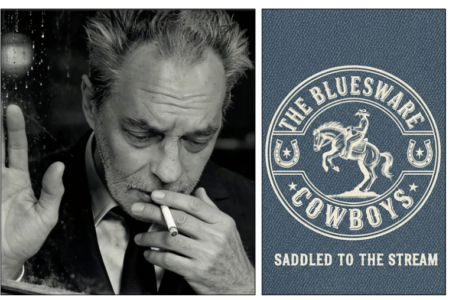
You can find Maslakowski' anthology and his latest singles on iHeart Radio, as well as all the major streaming platforms. Search under the band names The BluesWare Cowboys andDanger Maus. Joel also recommends folk visit his Website. www.theblueswarecowboys.com Where there is additional music, a promotional video, and more.Support a local veteran and artist by tuning in to the sounds of one of Dunkirk's own.