NYS climate action plan has aggressive agenda
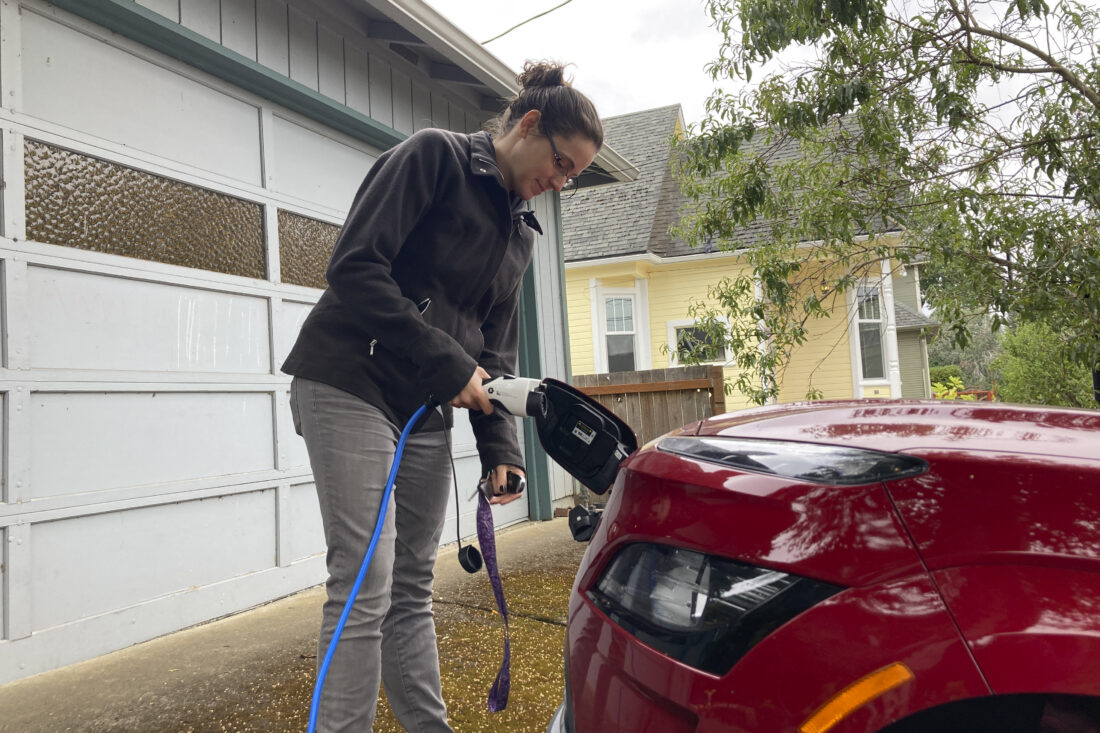
AP Photo Rebecca DeWhitt charges her electric vehicle in the driveway of the Portland, Ore., home she rents on Sept. 30, 2022. DeWhitt and her partner aren’t allowed to use the rental home’s garage and so they charge their EV using an extension cord that plugs into a standard electrical outlet outside their front door. The great transition to electric vehicles is underway for homeowners who can charge their cars in a private garage, but for millions of renters like DeWhitt, access to charging remains a significant barrier.
-
- AP Photo Rebecca DeWhitt charges her electric vehicle in the driveway of the Portland, Ore., home she rents on Sept. 30, 2022. DeWhitt and her partner aren’t allowed to use the rental home’s garage and so they charge their EV using an extension cord that plugs into a standard electrical outlet outside their front door. The great transition to electric vehicles is underway for homeowners who can charge their cars in a private garage, but for millions of renters like DeWhitt, access to charging remains a significant barrier.
-
- OBSERVER file photo In addition to farm machinery powered by non-fossil fuel sources, farms will be asked to better mitigate agricultural greenhouse gas emissions through manure management practices and precision animal feeding.
The plan, approved by a 19-3 vote, outlines actions needed for New York to achieve 70 percent renewable energy by 2030; 100 percent zero-emission electricity by 2040; a 40-percent reduction in statewide greenhouse gas emissions from 1990 levels by 2030, an 85-percent reduction from 1990 levels by 2050; and net-zero emissions statewide by 2050. It also identifies a variety of regulatory and legal changes, market mechanisms, and technologies essential to achieving these directives.
Further action will be needed for many of the plan’s directives to take effect, but the final scoping plan is the official policy for state government to follow to meet the 2019 Climate Leadership and Community Protection Act. Agencies will now begin making regulations to meet the plan, while legislation will come before the state Legislature in cases where state agencies can’t rely on administrative rule changes.
“New York state laid the groundwork for change with its nation-leading climate law, and through the diligent and thoughtful work of the Climate Action Council, along with input from the public in every corner of the state, we now have an action plan to follow to ensure we meet these critical goals. Today is certainly a day to celebrate, but this also marks the beginning of more significant work to come as we forge the path ahead and lead by example on how to transition an economy based on the conventional energy practices of yesterday to the thriving green economy of tomorrow,” said Doreen Harris, New York State Energy Research and Development Authority president and co-chair of the Climate Action Council.
The scoping plan is available to the public and will be submitted to Gov. Kathy Hochul and the state Legislature by Jan. 1. Sen. George Borrello, R-Sunset Bay, criticized the plan in a news release Monday.
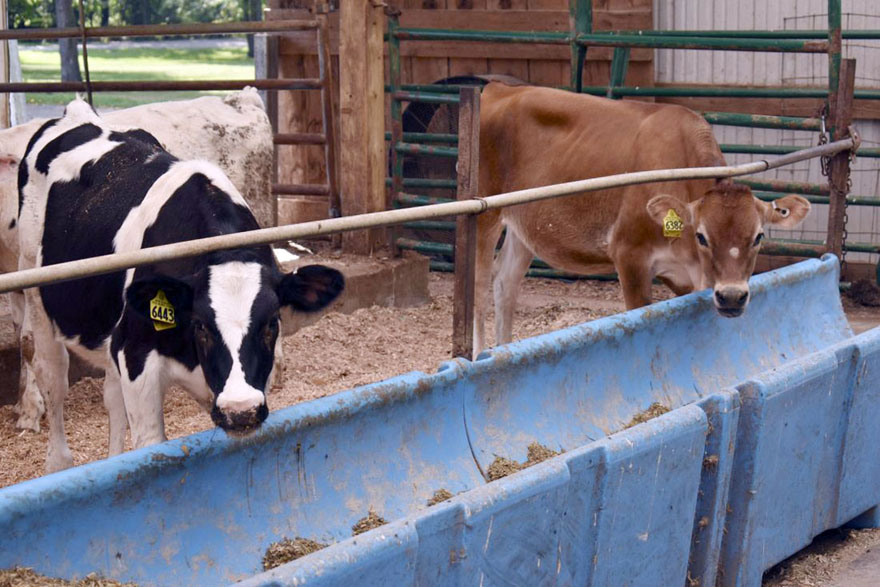
OBSERVER file photo In addition to farm machinery powered by non-fossil fuel sources, farms will be asked to better mitigate agricultural greenhouse gas emissions through manure management practices and precision animal feeding.
“Left unaddressed in this 445-page plan are the costs of this massive conversion. None of these mandates should move forward until a comprehensive cost benefit analysis is completed and made public. Legislation that I co-sponsor with many of my Republican colleagues would require this. By some estimates, the conversion to all-electric will cost as much as $40,000 per household while others indicate it could be up to $100,000 per household. Leaving New Yorkers in the dark on these costs and many others buried in this plan is simply unacceptable,” Borrello said. “Reducing emissions is an important goal and one that we should continue to pursue. However, our path to that goal should be responsible, achievable and cost-effective. Racing headlong into a complete overhaul of our energy sector without full transparency and clarity on the costs to New York residents and businesses is a dereliction of duty and an economic disaster in the making.”
CHANGES IN TRANSPORTATION
Getting around in New York state would change greatly between 2022 and 2050 under the Climate Action Council’s plan. Not only is the state’s goal to transition nearly all vehicles in New York state to zero-emission technology by 2050, but the state wants to enhance public transportation alternatives and promote smart growth and mobility-oriented development.
Among the strategies mentioned in the plan are variable pricing and parking strategies similar to congestion pricing to discourage people from driving into and parking in central cities or limit parking to those with zero-emission vehicles. The action plan also mentions a more expensive registration fee for fossil-fuel vehicles and cheaper rates for electric vehicles and mileage-based user fees to pay for transportation infrastructure and discourage people from driving.
“A large-scale investment in expanded public transportation and complementary modes of transportation like shared mobility, biking and walking infrastructure, and smart growth (higher density, mixed use development centered around low-carbon transportation options) will help make it easier for New Yorkers to travel without using a personal car. Trips are expected to be shorter, on average, because people will have easier access to jobs, schools, and services,” the plan states.
CHANGES IN BUILDINGS
The buildings sector was the largest source of emissions in 2019, responsible for 32% of emissions statewide, which includes the combustion of fossil fuels in residential (34%) and commercial buildings (19%), emissions from imported fuels (33%), and hydrofluorocarbons released from building equipment and foam insulation (14%).
Major changes would be seen as the state works to electrify buildings. The Climate Action Plan calls for no new gas service to existing buildings beginning in 2030; no natural gas within newly constructed buildings, beginning in 2025; no new natural gas appliances for home heating, cooking, water heating, clothes drying beginning in 2035; and, by 2050, 85% of homes and commercial building space statewide to be electrified with energy-efficient heat pumps and thermal energy networks.
The plan also calls for zero-emission codes and standards and a requirement for energy benchmarking for buildings; public financial incentives and expanded access to public and private low-cost financing for building decarbonization and a transition from hydrofluorocarbons used to cool buildings. Among the major changes for homeowners is the transition from fossil-fuel furnaces to geothermal heat pumps. Heat pumps are cheaper to run, but require a higher up-front cost for homeowners. The average cost to replace furnace or boiler system in a home is $10,000 or less while heat pump systems can range from $21,000 to $40,000 before rebates and tax credits are factored in.
“At present, charges levied on electric and gas ratepayers provide the largest source for funding for New York’s energy efficiency incentive programs, with heat pump incentives funded by electric ratepayers specifically,” the plan states. “This funding source has the benefit of established precedent and regulatory oversight, which as major new policy initiatives are considered, includes public process and assessment of ratepayer impacts. While there is scope for strategic re-direction and some potential expansion of ratepayer-funded programs, the scale of investment will require a leveraging of multiple sources of funding including other State, federal, and private funding sources.”
OTHER POINTS OF INTEREST
As has been covered in the past, the Climate Action Plan calls for more clean energy resources, such as land-based wind and solar, offshore wind, hydropower, fuel cells that use renewable fuels, and energy storage. The plan calls for load flexibility and controllability to be built into the electric grid as sectors electrify to create a more manageable system while updating and building new transmission and distribution systems statewide.
State officials are calling to transition the gas system in New York through strategic downsizing and decarbonization in close coordination with the increase of renewable energy generation and build-out of the electric system to ensure reliability and address energy affordability. The state wants to convert the vast majority of gas customers to all-electric by 2050, and during the gas system transition, manage repair of leak-prone gas pipelines to ensure safety of the gas system and reduce methane emissions.
The plan calls for improvements to the electric grid to improve efficiency and delivery of electricity and facilitate the integration of renewable energy and prioritize clean resources and finding zero-emission dispatchable technologies to meet demand and maintain reliability.
The state’s agricultural industry — a key factor in Chautauqua County — is being asked to mitigate agricultural greenhouse gas emissions through manure management practices and precision animal feeding. More work on carbon sequestration and storage potential in the agriculture and forestry sectors is a key strategy for achieving net-zero emissions across all sectors of the economy by 2050.
“New York Farm Bureau is reviewing the Climate Action Council’s plan to meet lofty goals for zero emissions in the state. At first glance, the report recognizes important strides New York’s farmers and foresters have made to reduce emissions, increase efficiencies, and sequester carbon. We have long believed that agriculture is part of the solution to mitigate climate change. An incentive-based approach for farms that invests in research, new technologies, and education will be key for farmer adoption and the plan’s success,” said David Fisher, New York Farm Bureau president. “However, major concerns remain including the push for electric, zero-emission agricultural vehicles when the technology does not exist for such equipment. The future commercial viability of the equipment must also be affordable and accessible for the state’s farmers. There must also be a power grid in every region of the state that can handle the electrical demand that the Climate Action Council is seeking today. New York Farm Bureau also supports renewable natural gas and biofuels as part of any climate smart plan. New York Farm Bureau will examine the full impact this will have on agriculture and will continue to work with New York state to address some significant challenges in the plan to do what is best for our environment and food system.”
TOP STORIES
Ferguson calls for closure of Route 60 hotel
Fredonia Mayor Michael Ferguson wants the shutdown of a Route 60 motel notorious for violent incidents. “I have ...

Construction of Chipotle begins
Dunkirk plants trees for Arbor Day
Legislature approves electric lawn equipment rebate program
Wdowiasz proposes dog shelter fees