County’s bed tax extension signed by governor
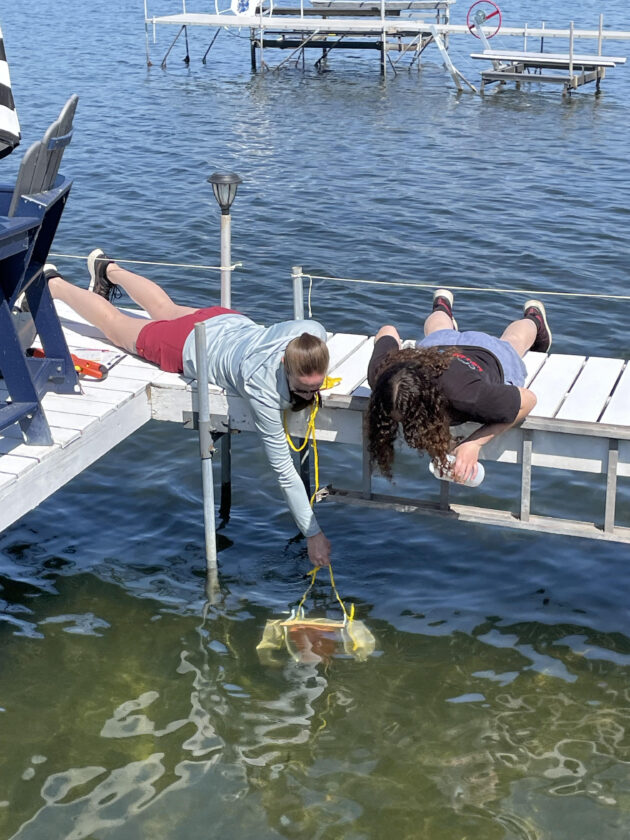
Photo by Vince Horrigan Pictured above, Dr. Allison Hrycik deploys an algae monitoring device to Chautauqua Lake. Hrycik and other researchers shared updates with the public at Chautauqua Institution on June 17.
-
- Photo by Vince Horrigan Pictured above, Dr. Allison Hrycik deploys an algae monitoring device to Chautauqua Lake. Hrycik and other researchers shared updates with the public at Chautauqua Institution on June 17.
-
- Submitted file photo Weeds are pictured on a Mobitrac on Chautauqua Lake.
Them governor signed the legislation (A.6581A/S.6626) earlier this month. Unlike previous years, the updated 5% occupancy tax legislation will require that more of the money collected from those staying in hotels, motels and Airbnbs be spent directly on Chautauqua Lake maintenance.
Under the new bed tax formula, at least one-half of the money in the tourism and convention fund must be allocated to the Chautauqua County Visitor’s Bureau, with the rest used for trade shows, special events, parks, recreational facilities and tourism attractions.
The biggest change is that one-half of the money in the Lake Management and Enhancement Fund be used for control, treatment or removal of invasive and nuisance weeds, reduction of harmful algal blooms or shoreline cleanup. Remaining money can be used for fishing, boating or recreational activities, reduction of watershed erosion, sedimentation and nutrient loading or similar activities.
According to the bill’s legislative justification, the bill is designed to make sure half of the lake management and enhancement funds are used for activities performed by the Chautauqua Lake Association, Chautauqua Lake Partnership, Cassadaga Lakes Association, Findley Lake Watershed Foundation, Bear Lake Association, and for Mobitrac and shoreline cleanup. The money is not supposed to be used for third-party staff expenses for project evaluation, supervision or related management or administrative expenses, such as the county watershed coordinator or the Chautauqua Lake & Watershed Management Alliance.
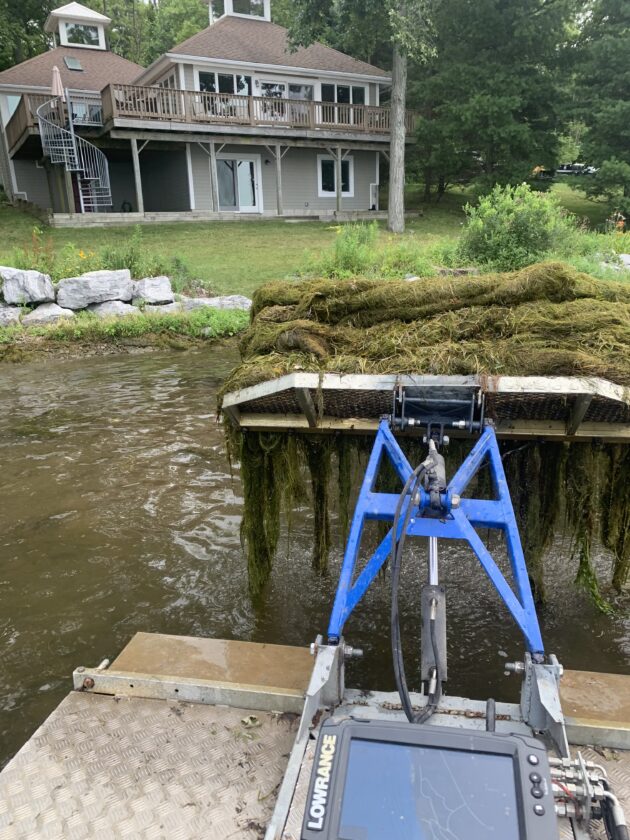
Submitted file photo Weeds are pictured on a Mobitrac on Chautauqua Lake.
“That will result in a substantial shift, or should result in a substantial shift to in-lake management,” Goodell said in April before the state Legislature approved the bills. “A significant portion in the past has gone for watershed erosion projects. But the state provides for funding available through our Environmental Conservation Fund and right now we have about $4.2 million of state grants for watershed management. So my point was the tourism industry needs a healthy lake now and at least half should go for in-lake maintenance now, and we have a much much larger pot of money available for watershed management so we should focus our efforts on bringing that money in, as we have the millions that are available for that.”
A resolution approved by the County Legislature in March contained a request to extend the 5% bed tax, but it wasn’t until Goodell and Borrello wrote their new draft legislative language that county officials saw the changes. Some Chautauqua County legislators disagreed with the change when they had to approve the updated legislation before it could be introduced in the state Legislature.
Legislator Susan Parker, D-Fredonia, said the county should have the final say on how the occupancy tax money is spent, not the state. At Wednesday’s legislature meeting, she introduced an amended resolution that stated “the County Legislature is in the best position to determine the allocation of occupancy tax funds to manage tourism and the many lakes and waterways of Chautauqua County.”
TOP STORIES
County places some homeless in Buffalo, elsewhere
MAYVILLE – Chautauqua County is currently housing homeless residents in both Erie and Cattaraugus counties, due ...
Arkwright, county thrive on living in past
Is it any wonder we continue to fail in looking to the future by maintaining our overabundance of government and ...
Espersen resigns from Fredonia board

Wells project earns high honors from state
Village frets over behavior at meetings
Fredonia Mayor Michael Ferguson confirmed this week he will ask the Board of Trustees to suspend the public’s ...