
In hot water: Comptroller targets fiscal woes of district
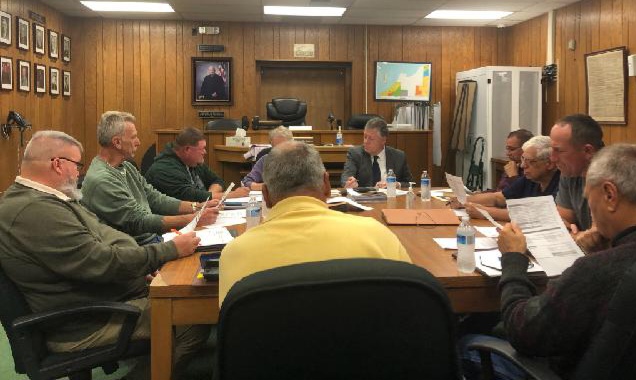
OBSERVER file photos The North County Water District Board is pictured from a meeting in October at the Dunkirk Town Hall and Court.
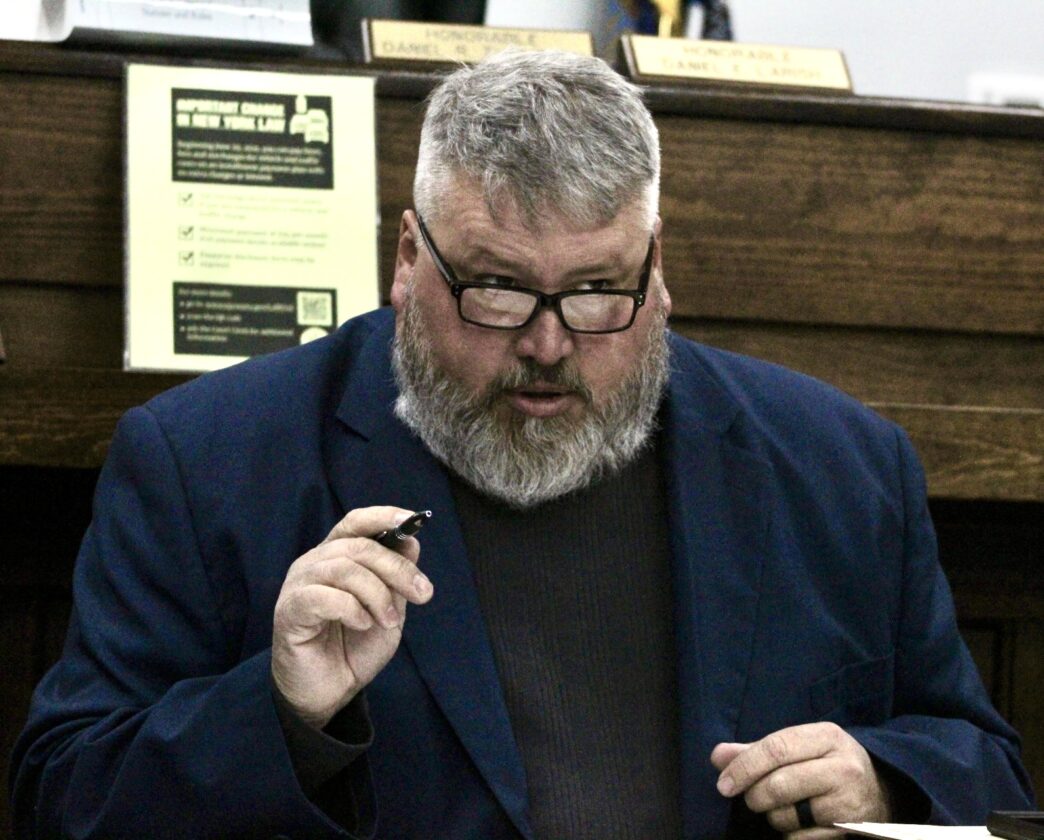
Portland Town Supervisor Rich Lewis, a member of the North Chautauqua County Water District, also serves as Chief Operator of the Wastewater Treatment Facility for the Village of Brocton.
OBSERVER file photos The North County Water District Board is pictured from a meeting in October at the Dunkirk Town Hall and Court.
Portland Town Supervisor Rich Lewis, a member of the North Chautauqua County Water District, also serves as Chief Operator of the Wastewater Treatment Facility for the Village of Brocton.
Trending
A local entity finds itself in hot water after a report from the State Comptroller's Office was released Monday morning.
New York state Comptroller Thomas P. DiNapoli announced Monday that multiple financial issues were found during an audit of the North Chautauqua County Water District. The audit period began Feb. 24, 2016 and covered activity until May 2 of last year.
DiNapoli's report stated, "the Board, County Legislature and other County officials did not adopt realistic budgets, routinely monitor the district's financial operations or take appropriate actions to maintain the district's fiscal stability.
As such, all county taxpayers have been indirectly funding district operations instead of just the real property owners who benefited from the district’s services."
The report found that officials spent $5.2 million from the general fund for District operations and did not repay the general fund, as required. The report states, "the district did not have sufficient funds; and did not thoroughly review budget-to-actual reports and did not prepare cash flow analyses."
As of Dec. 31, 2022, the district had a growing negative cash balance totaling over $5 million. The district was experiencing an operating deficit of $150,000 each year, and also owed the general fund $5.2 million, plus related interest.
Additionally, county officials overestimated revenues by a total of $1.6 million from 2019-2022, averaging more than $400,000 each year.
But that's not all.
Officials also did not enforce collection of water usage billed to Chadwick Bay Intermunicipal Water Works (CBI), resulting in a balance owed of $1.4 million. The district's cash balance was impacted by the balance owed, which made the district reliant on county funds for cash flow and the cost of operation. The county provided an advance of approximately $4 million for the construction of district capital improvements.
The North Chautauqua County Water District was established in February 2016 to construct water transmission facilities and provide wholesale water distribution to County residents living in the townships of Dunkirk, Pomfret, Portland and Sheridan, and the village of Brocton. The Board consists of Brocton Mayor Craig Miller and town supervisors of Portland, Pomfret, Sheridan, and the Town of Dunkirk, along with three members appointed by the County Legislature. Sheridan Town Supervisor Tom Wik and Dunkirk Town Supervisor Priscilla Penfold have both recently taken over their respective Town Supervisor seats after the deaths of former Supervisors John H. Walker II (Sheridan) and Richard "Dick" Purol (Dunkirk) within the past year. Pomfret Town Supervisor Dan Pacos took on increased responsibility with North County Water, while Portland Town Supervisor Rich Lewis also serves as Chief Operator of the Wastewater Treatment Facility for the Village of Brocton.
A Financial Analyst to the County Legislature develops the district's budget, while the Budget Director and the county executive are responsible for reviewing the Financial Analyst's budget estimates prior to submission to the County Legislature for budget adoption.
"The Board, Financial Analyst, Director of Finance, County Executive, Budget Director and County Legislature have a shared responsibility for managing and maintaining the District’s fiscal health," the report states.
Also according to the report, the Financial Analyst stated the original water usage estimation, from when the District was formed, was used to determine the amount to budget for revenues. That figure was approximately 300 million gallons, which was multiplied by the Board-approved rate.
However, the Financial Analyst has only billed for water usage averaging 208 million gallons each year. According to the report, the Financial Analyst, along with four Board members, stated they were aware that actual usage was less than the amount budgeted. The Financial Analyst and three Board members could not explain why they did not adjust budgeted revenues to reflect actual usage, and one Board member told the auditor they assumed that the budget was adjusted.
In response to the report, County Executive PJ Wendel and County Legislator Chairman Pierre Chagnon stated the county "generally agrees with the financial findings" of the Comptroller's Office. A Corrective Action Plan will be formalized to address the financial stability of the District.
Regarding advances paid to the District to account for cash flow issues, Wendel and Chagnon stated it is the County's intent that "all advances from the County's general fund made to the District shall be repaid," including interest to account for what would have been earned by the County had the advancements not been made. The funds have not yet been repaid to the County because of insufficient cash.
The report also states, "because the county combines cash for all funds into one account, did not monitor District spending and did not prepare cash flow analyses, County officials were unaware that the District utilized funds in 2017 and 2022 without Legislative approval and that, in 2019, 2020 and 2021, the District utilized more funds than authorized by the
Legislature."
Wendel and Chagnon noted the County's advance of approximately $4 million for the construction of District capital improvements was made in lieu of issuing Bond Anticipation Notes on behalf of the district. Doing so avoided additional expenses of bond counsel and other associated charges.
The Office of the State Comptroller responded, "The county’s 2016, 2018, 2019, 2020 and 2021 resolutions relevant to the interfund advances state that the funds were to be repaid to the general fund on or before December 31 in the year they were advanced and, although (General Municipal Law) Section 9-a also required the advances to be repaid by the end of the year the funds were advanced, they were not. The 2017 and 2022 general fund advancements were also made without a resolution or any stipulations for repayment."
Wendel and Chagnon concluded their response to the Comptroller's Office with a statement of support for the District. As stated, "A regional approach to governmental operations, and in this case water production and delivery, will ultimately benefit the residents of the District and Chautauqua County as a whole. While in hindsight the participating local governments need additional time to adjust user charges and other financial arrangements to stabilize the District, the creation of the District and its securing of a consolidated, reliable water source for North County municipalities was a critical project for Chautauqua County’s long term future."