Updated state plan aims to assist city
Cash-strapped Dunkirk could soon receive some much needed relief.
On Thursday, state Sen. George Borrello and Assemblyman Andrew Molitor announced in a letter to Common Council members that both introduced legislation to establish an updated Fiscal Recovery Act for the city of Dunkirk. Before the bill can move forward in Albany, however, it needs the support of the council.
“As you know, Dunkirk’s financial condition is in crisis. The loss of NRG plant revenue created a structural deficit that has never been resolved, and years of poor fiscal management have made it far worse,” both Borrello and Molitor said in the letter. “Chronic reporting failures, unreliable financial records, and persistent deficits have pushed the city to a point where essential services are now at risk.”
Adding to the disarray was a city treasurer who was elected to serve for more than two decades through the end of 2025. Mark Woods is currently facing corruption charges in the theft of at least $120,000 of city funds.
If council approves the terms, possibly at its meeting next week, the updated legislation:
— Authorizes deficit bond financing of up to $17 million to address actual deficits in the General, Water, Sewer, and Capital Projects funds from the close of the 2024 fiscal year, with bonds to be issued on or before Dec. 31.
— Explicitly reaffirms the city’s obligation under state law to honor all collective bargaining agreements it has entered into. This clarification is included because concerns have been raised that certain negotiated agreements have not been fully implemented, a situation that has created uncertainty and contributed to tension between the labor community and city government.
— Creates a state-managed debt service fund to ensure timely payments to bondholders and improve the city’s ability to access capital at a lower cost.
— Allows for temporary deficit financing to preserve essential city services during the recovery
period.
Dunkirk’s financial troubles came to light in March 2024 when the city did not have the funds to pay a vendor for work. Its deficit ballooned to $16 million that forced an 84% tax increase to be passed on to its residents in 2025.
This year’s current $30 million budget, however, has gaps with worries the city could run out of money by the fall.
Both Borrello and Molitor say the legislation was based on a request from Mayor Kate Wdowiasz. “Though we still maintain that the best path forward to long-term financial stability will require third-party financial oversight from an independent control board, we have assisted with this request knowing that the state comptroller will continue to have oversight,” the state officials said.
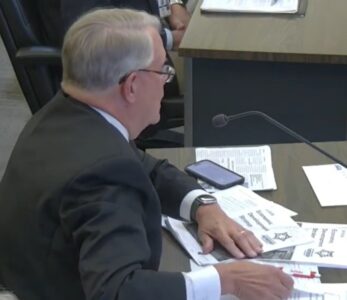
Tensions have been high in the city since the April 21 council meeting when union representatives and regional officers blasted the administration for its lack of what it considered good-faith bargaining. At that meeting, John Arns of the Dunkirk Police Benevolent Association and Jake Stern of the firefighters union took issue with the discord.
“Human resources has been unable to explain why officers are not properly being paid for overtime we are required to work,” Arns said while addressing council. “The city is now facing 14 separate charges before the (state public employee relations board): seven for unilateral changes to the contract without negotiation, and seven for retaliation when we assert our rights under the contract and under law.”
Council — with three of the members taking office in January, including Frank Torain, Gary Frederickson and Michael Civiletto — as well as returnees Nick Weiser and Natalie Luczkowiak have rarely addressed or offered solutions to the city’s woes during the last four months. They sat quietly while union members spoke during the last session.
“We support Dunkirk’s path to fiscal recovery and it must be built on transparency, accountability, and sustainability,” Borrello and Molitor concluded.
TOP STORIES
Wandel offers water meeting updates
Trustee Paul Wandel offered a news-filled report at the latest Fredonia Board of Trustees meeting, topped by talk ...
Legislature to again take up job creation resolution

Savoring the ‘moments’
Wdowiasz pushes council to speed up budget
Dunkirk council members got the first draft of a 2027 budget calendar last week. Mayor Kate Wdowiasz immediately ...
State urges residents to be ready for extreme heat
New Yorkers are being urged to prepare for a period of extreme heat starting Tuesday with "feels-like" temperatures ...