
Trending
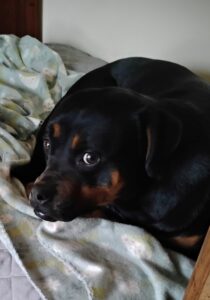
The Fourth of July is the holiday I dread most. It's not because I am unpatriotic. It's just that I have no taste for explosions and screeching missiles, which go on here in Dunkirk from early evening to late at night, and from mid June until the end of July. It's also because Rocco, our dog, is terrified of them and becomes unhinged at the slightest crackling sound. He has taken up residence in the basement during this tortuously hot and loud period of summer, preferring the company of spiders and centipedes to the world of humans.
It seems to me that the big-boom thrill felt by the backyard blasters would wear off after a few days. Out of sheer boredom, they might find some other activity to celebrate the USA, like coloring in red, white and blue flags in crayon books, or practicing a fife or drum or harmonica, or playing a marathon card game of War, or maybe even reading the Declaration of Independence. But apparently nothing compares with the rush that comes from the process of click-lighting a wick, strutting boldly away, and listening with subdued glee to the ear-splitting blast of a super cherry bomb and the swooning admiration of ten-year-old kids.
Returning to Rocco, and all the others like him who tremble and go into hiding at the sound of screeching and blasting, I am wondering what it is that causes some dogs to react that way. On a recent walk with Rocco, a neighbor wanted to meet him. I explained to this neighbor that Rocco is very shy, very unsociable with strangers. The neighbor's comment was to the effect that his grandfather, who lived in the country, was of the belief that timid dogs, especially ones afraid of gunfire, are worthless, and that he would shoot them rather than waste money on food. Hmmm. End of conversation.
But it does bring about the topic of evolution. Geneticists might claim that fear of guns is uncommon among dogs because the gene pool of the more timid, easily frightened dogs has been depleted - fewer survived, fewer reproduced. Timidity was not conducive to evolution, and therefore most dogs are not timid and not afraid of loud noises.
Of course there is the possibility, in some cases, that a dog was traumatized by loud noises as a puppy and has never gotten over it.
But I'm getting at something else here. It is theorized that the connection between man and dog (wolf, as it were) goes back more than 20,000 years. It was a mutually beneficial relationship in that humans, with superior foresight and innovative hunting tools, could help provide dogs with a more steady diet. Dogs, with superior instincts, were beneficial in tracking prey, and served to alarm the nomadic clans about dangerous animals and enemy attacks. The bond has held ever since, in times of peace and war.
It is war that I wonder about, and its effect on the psychology of dogs. In times of war, dogs have been victimized in ways we don't often think about. Though they probably don't think in abstract ideas, dogs must have sensed chaos, senseless violence, and impending doom as they found themselves in the middle of a battle, or at time when the enemy has taken over the farm, or the village, or the city in which they live. And, like trained horses, they were used as sacrificial beasts of burden. It must have felt like utter madness, with death ever present. I wonder, is it possible that there is a transferral of memory, a kind of mental genetic coding, that passes through generations to manifest randomly as an intuitive, uncontrollable fear of bombs and gunshots and searing missiles?
Far fetched, yes. (Such is my MO.) But we do know that war has severe psychological effects on humans. And as evening approaches (soon now, the bellicose backyard blasters begin blowing up their baby bombs), I'm thinking about Middle East war veterans, about what they experienced. I'm willing to bet that not many of them get a kick out of this kind of noise, because what they saw and heard was something serious, not a kids game. They saw first hand the horrific effects of IEDs and gunshots.
Finally, the real fireworks, the ones that light up the entire sky at night in phantasmagoric colors and god-like images as a celebration of our birth as a nation and our growth as a democracy, are wonderful examples of the marriage of science and art. For dogs' sake, let it be just that one day, July Fourth, when we indulge in this magical tradition. It would mean so much more for all of us.
Pete Howard, author of "Rosebud Dreamworld," lives in Dunkirk.