
Wild turkey hunting tips
Each season I give seminars about hunting the wild turkey. Well, if any of you have been to any of my “seminars,” they are like a campfire chat. I have discovered over the years that most folks don’t enjoy being talked to. Rather, they enjoy being a part of the conversation.
This weekend the golf world is celebrating a special event, the Masters. While I do enjoy the game of golf, I am not close to being an expert. Like anything in life, I enjoy listening to experts in the field. In the world of golf there are plenty of experts. One such expert/coach made a statement that caught my attention many years ago. In short form, he said there is no one swing that works for every golfer. Each golfer needs to find their own swing, within reason, and one that works for them and helps them enjoy the sport.
Hunting, especially spring gobbler hunting, is no different. We have always said there isn’t a wild turkey that could win a turkey-calling contest. Hence, as hunters we need to listen and give the birds we are hunting the same as they are giving us. This past week I was able to fulfill a lifelong dream — hunting the Florida Osceola turkey. It was a great hunt and I learned a lot in a short period of time from one of the best, Tom “Doc” Weddle. What I devoured about the Osceola was that they are, for the most part, a swamp bird, which for me and others means going through knee-high water in thick woods. Well, again, I was partly wrong.
Now, I’m sure some hunts in Central Florida are like that, but from what I’ve learned and saw first hand is they are in the minority. I also thought that the final leg of the Grand Slam bird, for the most part, is a loner and call shy. Like I mentioned, my hunt wasn’t like what I had thought. So, when we had to make two trips just to carry the flock of decoy spread — a total of one full strutter, one half strut jake and six hen decoys — I thought we were hunting early season geese. But, when in Rome, do as the Romans do.
Doc’s calling was minimal and spot on as the birds one by one made their way to our ambush. With a total of 10 live hens working their way in and out of a decoy spread, the first gobbler made its entry and then another. With just a few sexy soft yelps and purrs, another gobbler made its way through the fog-covered pasture into our spread.
That’s right, 10 live hens, two live gobblers, plus decoy spread was in a 60-yard radius of our ambush. As I sat back and watched, I realized, “do what the birds are telling you.” If they are aggressive, be aggressive with both calling and the decoy spread. If they are shy and laying back, we need to do the same.
All of the work to get birds into range is in doubt if you, as the hunter, don’t know when and where to shoot. This starts with your gun and shells. We must know our shotgun inside and outside. The keys to dropping a wild turkey with one shot are waiting for the bird to walk within range, knowing when to shoot and where to aim.
Determine what fits into your budget. You can buy inexpensive, “old-school” copper plated lead turkey loads and kill turkeys within 40 yards all day, or you can splurge and shoot the best new technology found in TSS turkey load. At minimum, you’ll want to test a couple of shot/pellet sizes, typically ranging from No. 4-9 to see how your shotgun reacts to multiple loads. The goal is to optimize your pattern to best suit your expected hunting situations and shot distances. Ask some buddies to see if they have any extra turkey loads, or invite them to the range to join you for the patterning session so you can share shells and cut costs.
In addition to turkey loads, save money by purchasing some inexpensive target loads. You can use these to start the patterning process and get on paper, rather than burning up your expensive turkey loads.
There are many websites that allow you to print off basic paper target, or you can create your own with a large sheet of paper and a permanent marker. I prefer to buy reactive targets, my favorites being orange peel targets. One can buy these in bulk to use for all target shooting needs. You’ll want at least a 10-inch target to evaluate your pattern.
Even if you have a soft-shooting turkey gun, a thorough patterning session will probably beat up your shoulder. If this is a concern, don’t hesitate to pick up a solid bench rest such as a lead sled to minimize your abuse. There’s no need to endure punishing recoil, and a heavy dose can lead to bad shooting habits and poor patterns.
Always start with a large target surface area. Save cardboard boxes for weeks in advance of your patterning session, or visit a local business to see if they’ll let you dig into their recycling bin. I recommend a 3-foot square piece of cardboard. Start by drawing a large, dark circle in the center of a piece of cardboard and shoot it with your target loads. Shoot the dark circle from 10 yards and make necessary adjustments in your shotgun sight to center your point of impact. Hang up a fresh piece of cardboard and stick your real target in the center of the cardboard. Now it’s time to shoot a turkey load. Back out to 20 yards and shoot the target. Once again, adjust your sights to center the point of impact. If you’re satisfied with the pattern and you don’t want to test any additional turkey loads, back out and shoot at any extended distances from where you hope to be able to shoot turkeys.
If you want to test additional turkey loads to better optimize your pattern, repeat the previous steps with each load.
Shooting a turkey gun is more like shooting a rifle, so take time to practice shooting from real field positions. Use your target loads to do this, and don’t worry so much about where the pellets are hitting on target. Focus on your shooting fundamentals, such as creating a natural rest and squeezing the trigger.
Is there a chance you bumped your sights at some point during the season? Perhaps you traveled by airplane to hunt out of state? When in doubt, shoot your turkey gun at a target. At minimum, this is a great confidence booster, and the last thing you want is to put all the pieces together to bring a gobbler into range and then miss your shot because of equipment failure.
Because a swarm of shotgun pellets will damage a wild turkey’s breast, I prefer not to shoot a close-range tom or jake when he’s strutting. A tom’s head is tucked low to his chest when strutting so, if possible, I like to get the bird to come out of strut before dropping the hammer on him.
Strutting toms and jakes will almost always stop strutting and stand tall with their neck extended if you make a few hen yelps at close range. This is easy when using a mouth call, but it can’t be done if you’re relying on a slate call or box call because both hands will be holding the shotgun.
And while this advice might sound odd, you can emit just about any sound and a close-range tom will stop strutting and stick his head in the air and look your way. Mimic the sound of a doe or fawn bleating, like you would to stop a walking whitetail, or simply say “Hey, bird” in a loud voice. Be ready to shoot immediately because a tom or jake probably won’t stand there long with his neck extended looking your way. You’ll probably have two seconds to fire before he starts a nervous retreat.
After the bird stands at alert, aim low on the neck, right where the feathers begin to grow. This gives you some margin for error; some pellets will strike above this point of aim, impacting the bird’s brain. Some pellets might hit the top of the breast, too, but at this close range it’ll be minimal.
I don’t recommend aiming for the top of a tom’s head — in an attempt to avoid placing a single pellet in the breast — because if you shoot just a touch high, or if your shotgun throws the vast majority of pellets above your point of aim, then you’ll miss.
Practice is important and must be done with each weapon we take into the field.
Local Sports
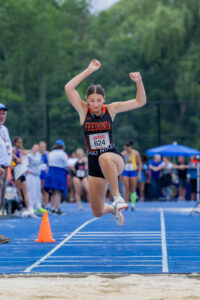
2026 OBSERVER/Post-Journal Girls Track & Field All-Stars
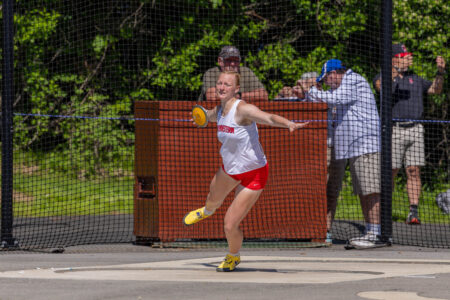
Southwestern’s Johnson throws herself into history books
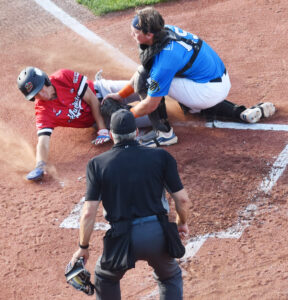
Extras again
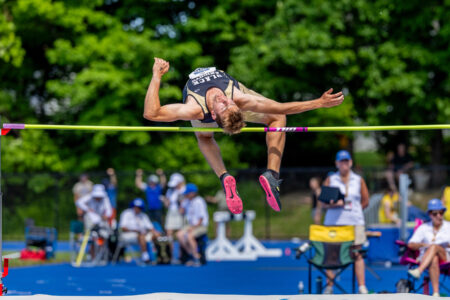
Nate the Great
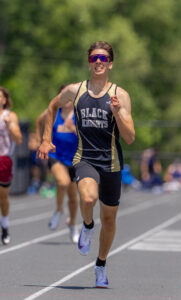
2026 OBSERVER/Post-Journal Boys Track & Field All-Stars
‘Money’ McGee takes Woah Nellie Modified feature
BUSTI — The Woah Nellie Modified Series made its highly anticipated second-ever appearance at Stateline Speedway, ...