
Record buck age structure marks big year for NY hunters
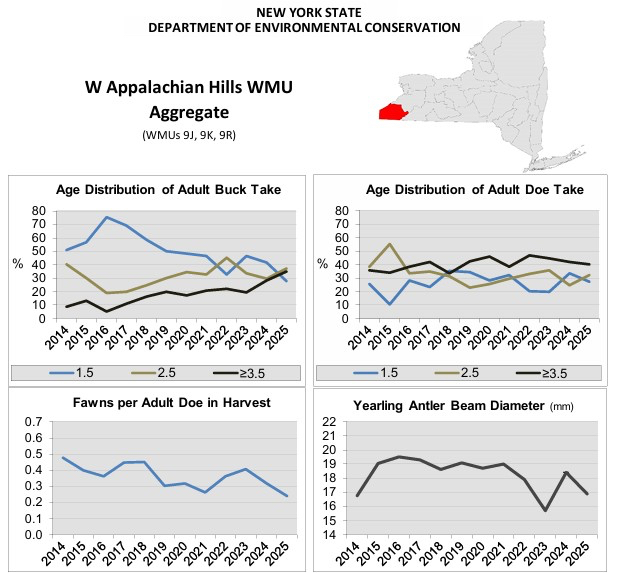
Illustration provided by NYSDEC Graph aggregates for the Wildlife Management Units are based on ecological features, human population density, land uses and deer harvest history. Age distribution of adult buck and doe harvest is influenced largely by survival factors (weather and food supply), hunting pressure and hunter choice.
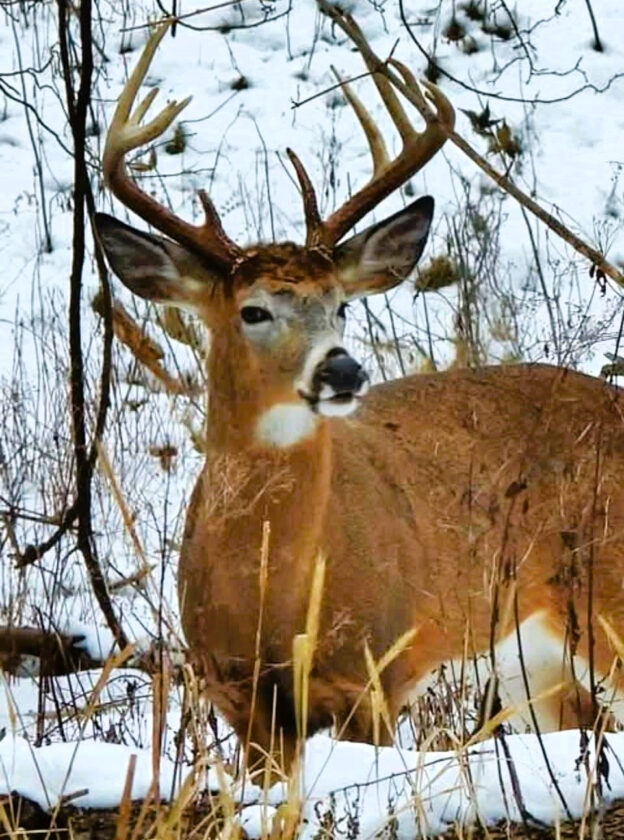
Photo courtesy of James Monteleone Hunter choice allows 2 1/2-year-old bucks to reach a much larger proportion size at 3 1/2 years old, the current trend across New York state.
Illustration provided by NYSDEC Graph aggregates for the Wildlife Management Units are based on ecological features, human population density, land uses and deer harvest history. Age distribution of adult buck and doe harvest is influenced largely by survival factors (weather and food supply), hunting pressure and hunter choice.
Photo courtesy of James Monteleone Hunter choice allows 2 1/2-year-old bucks to reach a much larger proportion size at 3 1/2 years old, the current trend across New York state.
Trending
New York deer hunters once again proved why they remain one of the most important conservation forces in the state, and nowhere was that more evident than in Chautauqua County. With our weather forecast for this weekend, this seems a good time to share good news and stay safe under a roof.
According to the latest estimates released by the New York State Department of Environmental Conservation, hunters harvested an estimated 227,032 white-tailed deer during the 2025-26 hunting seasons. That figure was approximately 2% higher than the previous year and nearly identical to the state's five-year average, underscoring the continued strength and stability of New York's deer population.
For Chautauqua County hunters, the numbers were especially impressive. In Wildlife Management Units 9J and 9K alone, hunters harvested a combined 10,862 deer during the 2025 season, placing the county among the most productive deer hunting regions in New York state. Those harvest totals are not simply impressive statistics for sportsmen -- they are one of the most important wildlife management tools available to the DEC.
Every deer harvested represents participation in a carefully managed conservation system that depends heavily on hunters. Through regulated harvests, hunters help maintain healthy deer populations, reduce agricultural damage, limit forest over-browsing, and help balance herd numbers with available habitat.
For decades, New York's deer hunters have funded conservation through license fees and excise taxes on equipment. But the harvest itself remains the most direct contribution sportsmen make to wildlife management. The latest DEC report released just last week shows hunters continue to answer that call.
The report also highlighted several significant statewide milestones. For the first time in modern New York history, hunters harvested as many mature bucks (aged 3.5 years or older) as yearling bucks. Twenty-five years ago, only 10% of harvested bucks were in that older age class, while 67% were yearlings. Today, the age structure of New York's buck population reflects better herd management, improved hunter selectivity, and healthier deer populations overall.
The expanded use of crossbows also had a major impact during the 2025 season. Following changes to state law that allowed crossbows to be used during the same seasons and in the same areas as vertical bows, hunters embraced the opportunity. Crossbows accounted for 55% of the total archery harvest statewide, compared to just 33% the previous year.
DEC officials noted that crossbows are helping broaden participation among hunters, especially older sportsmen, lady hunters, and new hunters entering the sport. That trend matters greatly in a state where long-term hunter recruitment remains essential to future conservation funding and wildlife management success.
The report also included encouraging news regarding Chronic Wasting Disease. Of the 3,050 deer tested statewide during the 2025 season, zero tested positive for CWD. Maintaining New York's CWD-free status remains one of the DEC's highest wildlife priorities, and continued vigilance by hunters plays a key role in protecting the state's deer herd.
The annual harvest report itself deserves recognition. DEC biologists and field staff checked more than 12,000 harvested deer and analyzed harvest reports from hundreds of thousands of hunters to produce the statewide estimates. The report provides detailed maps, regional breakdowns, trends, and biological data that help hunters, landowners, and wildlife managers understand the condition of New York's deer herd. In many ways, it is one of the most important annual conservation reports produced in the state.
Still, one question continues to surface among hunters each year: Why does it take so long for New York's final harvest numbers to be released by the DEC? Many states across the country publish preliminary or final harvest estimates within weeks of their seasons ending -- sometimes in fewer than 25 days. Meanwhile, New York's detailed statewide summary often arrives months later, and later each year, it seems.
To be fair, New York faces unique challenges. The state has more than 530,000 licensed hunters, dozens of Wildlife Management Units, multiple hunting seasons, varied reporting methods, and extensive biological sampling requirements. DEC's process is clearly thorough and science-driven.
Accuracy matters, but in an age of digital reporting, E-tags, and near real-time data collection, hunters increasingly wonder whether portions of the reporting timeline could be accelerated. This year, 63% of successful hunters reported their harvests, well above the recent average, and electronic tagging continues to expand. Those advances would seem to create opportunities for quicker preliminary reporting while maintaining the integrity of the final data.
Hunters are deeply invested in these numbers because they care about the future of deer hunting in New York. Faster reporting would help maintain public interest, improve media coverage, and provide more timely information to hunters planning future seasons.
Even so, the bigger picture remains overwhelmingly positive. New York continues to offer some of the finest deer hunting opportunities in the country, and Chautauqua County remains one of the state's premier destinations for whitetail hunters. The combination of quality habitat, strong hunter participation, responsible wildlife management, and a thriving outdoor culture continues to produce exceptional results.
The 2025 harvest numbers show more than just successful hunting seasons. They demonstrate that hunters and wildlife managers are working together effectively to sustain New York's deer herd for future generations. In places like Chautauqua County, that tradition remains as strong as ever. To review the NYSDEC Whitetail Deer management plan, visit https://extapps.dec.ny.gov/docs/wildlife_pdf/deerplan21.pdf.
Gotta love the outdoors.
CALENDAR
May 23: Memorial Day Shoot, Hanover Fish & Game, 780 Overhiser Rd., Forestville. Canceled.
May 30: Allied Sportsman, 90th Anniversary Chicken Barbecue, 12846 Clinton St., Alden; $15, Info: Alice, 716-864-2034.
June 1: NYS Inland (Chautauqua Lake) Muskellunge/Tiger Musky opening day, minimum length 40 inches, daily limit of one, season ends Nov. 30. Great Lakes musky season opens June 15.
June 5-7: WNY Walleye Classic, Lake Erie -- Dunkirk Harbor HQ, contact Chairman Josh Larsen, 716-490-4226.
ııı
Submit calendar items to forrestfisher35@yahoo.com at least 10 days in advance.