
Staying safe from bears
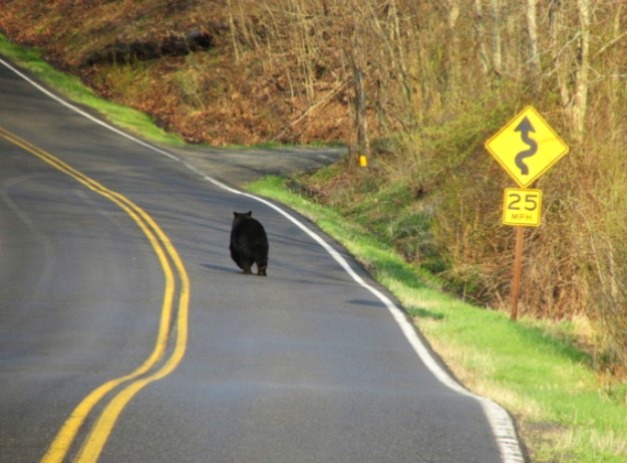
Photo courtesy of Daniel Nicoponski Black bear sightings on public roads are more common now than 25 years ago.
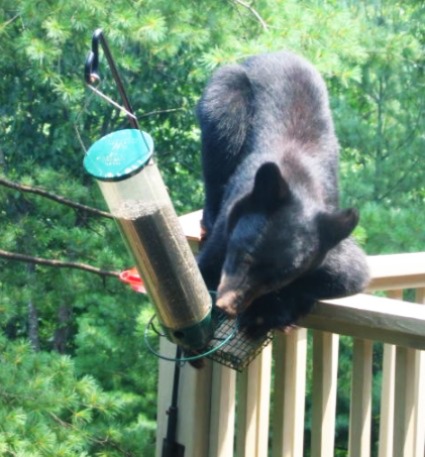
Photo courtesy of the NYSDEC Young bears are playful and hungry, always searching for easy food. Homeowners should take caution to keep food away from access to bears.
Photo courtesy of Daniel Nicoponski Black bear sightings on public roads are more common now than 25 years ago.
Photo courtesy of the NYSDEC Young bears are playful and hungry, always searching for easy food. Homeowners should take caution to keep food away from access to bears.
Trending
Residents across Chautauqua and Allegany counties are reporting more black bear sightings this early summer -- and wildlife experts say that’s exactly what they expect this time of year.
According to the New York State Department of Environmental Conservation (DEC), early summer is the peak season for bears to venture into neighborhoods, backyards and other developed areas. While these encounters can be surprising, they are often a normal part of a bear’s life cycle.
Many of the bears being spotted are young males, about 18 months old, which have recently left their mothers and are searching for territories of their own. Curious and constantly looking for food, these inexperienced bears may wander through residential areas while learning to survive on their own.
Adult male bears are also on the move during the breeding season, traveling long distances in search of mates. Surprisingly, according to the DEC, both male and female bears may mate several times in early summer; in fact, it's not unusual for cubs from a single litter to each have a different father. But female bears rarely leave their home ranges; for the good of the gene pool, they let the males come find them. So adult male bears may travel long distances through various female bear home ranges. Meanwhile, mother bears with cubs (sometimes as many as six!) are working hard to find enough food to support their growing families, sometimes expanding their normal range in the process.
According to the NYSDEC, the currently estimated population of black bears in New York is at a minimum of 6,000-8,000 bears. Of these, only 10-15 percent inhabit the central-western region. An average adult male weighs about 300 pounds while females average about 170 pounds. It is important to understand that bears will eat nearly anything. They are omnivorous, eating grasses, berries, fruit, nuts, seeds, insects, grubs, and carrion, as well as human sources of food like corn, honey, bird seed, trash, and pet food when available. They spend a great deal of time exploring for food, and this can bring them close to humans. Bears are intelligent and they learn from experience. If an activity results in food, they will repeat that activity.
DEC reminds us that if an encounter with people is negative, they learn to avoid people. Also, if an encounter with people doesn’t result in a reward (food), they will not have any reason to stay around.
The DEC reminds residents that the best way to protect both people and bears is to eliminate food attractants. Once bears discover easy meals around homes, they are likely to return, creating conflicts that can put both humans and wildlife at risk. One example is garbage dumps with recently cooked food.
To help stay safe and secure, Homeowners are encouraged to follow a few simple rules:
• Secure garbage in bear-resistant containers or store it indoors until pickup day.
• Remove bird feeders during the warmer months if bears are active.
• Keep pet food and grills clean and stored when not in use.
• Never intentionally feed bears.
• Give any bear plenty of space and never approach it.
Black bear populations have gradually increased across Western New York over the past decade, a sign of successful wildlife conservation and healthy habitat. As more bears share the landscape with people, awareness and responsible behavior become increasingly important. So do hunting seasons endorsed by the DEC that help balance wildlife populations for many species, including bears.
If you encounter a bear, remain calm, keep your distance and allow it an escape route. Most bears naturally avoid people and will move on if they are not attracted by food.
By taking a few simple precautions, residents and visitors alike can help keep bears wild while safely enjoying everything the Western New York outdoors has to offer this summer. To learn more, visit the DEC BearWise webpage and the BearWise website for free printable fact sheets and materials.
Lastly, for Saturday afternoon, the Sunset Bay Walleye Shootout fishing tournament weigh-in will be held on the big stage, on the beach sand at the Sunset Bay Beach Club; weather permitting. This huge fun event for angler contestants and non-angler observers offers the biggest cash winnings for participants in the walleye fishing fleet. Keeping our fingers crossed that the predicted nasty weather possibilities will pass after the late afternoon weigh-in. Anglers have been catching record numbers of walleye through this event, but the main competition day and prize awards are based only on the Saturday catch of a 6-fish box per fishing team. The stage is set. It should be a great afternoon for everyone on the beach.
Gotta love the outdoors.
Outdoor Calendar:
July 16-19: Sunset Bay Walleye Shootout, www.walleyeshootout.com; Chairman Don Ruppert, 716-435-4137; donaldjruppert1970@outlook.com.
July 18: Saturday 50s Trap Shoot, Celeron Rod/Gun Club, 210 Livingston Avenue, Celoron, registration 9 a.m.-10 a.m.; Info: Jerry Martin: 814-688-9209.
July 18: 716 KAYAK Bass Trail, Red House/Quaker Lakes, 5:30 a.m.-1:30 p.m., $30 entry, visit Tourney X online to register.
July 18-19: Sodus Pro-Am Salmon Team Tourney, Lake Ontario, Wayne County, visit www.sodusproam.com to register/details.
July 19: Fly Fishing 101 Class, $25 adults, $20 kids, The Hairy Trout, 3891 Seneca St., West Seneca, NY, 716-575-5037.
July 19: Ellington Rod and Gun, "Don't Know Partner Trap League," 1045 Hagerdon Hill Rd., Ellington; Info: 716-287-3987.