Making things happen at the Audubon
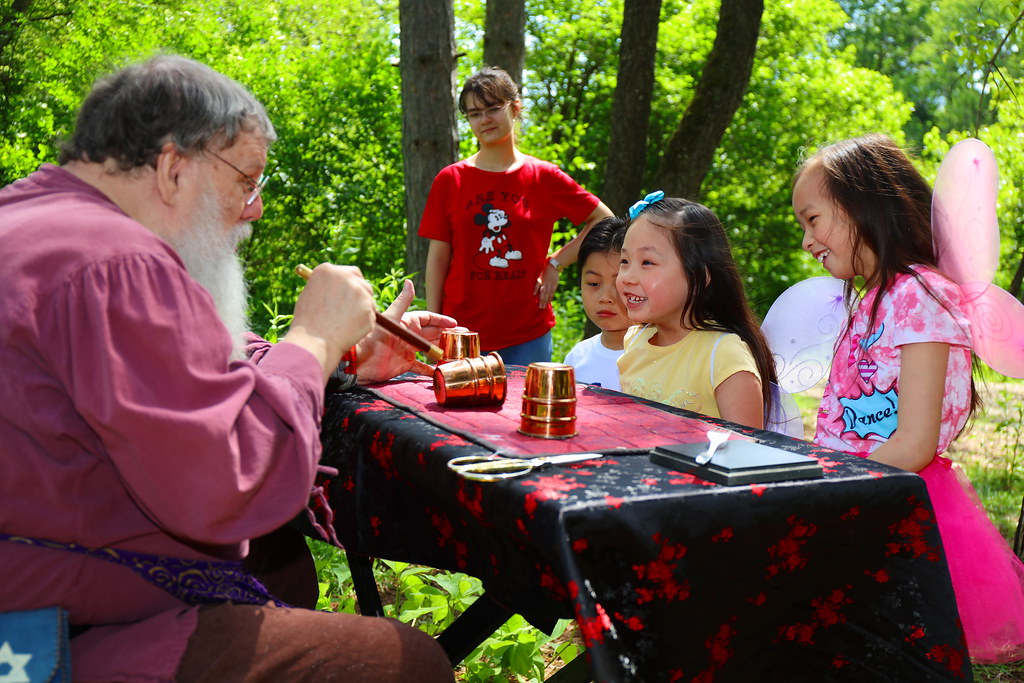
Volunteers are magical, and make festivals and events, such as our upcoming Dragons and Fairy festival, a safe, fun, and educational experience.
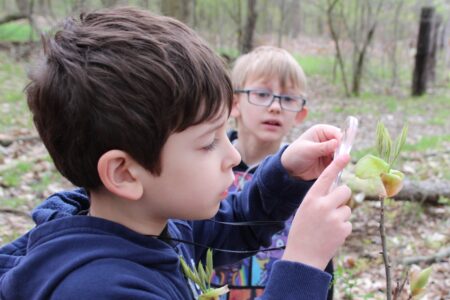
Recently, I led a group of first grade students through the woods behind Warren Area Elementary school. The students were bent down on the forest floor, magnifying glasses in hand, shouting out discoveries. Amid this enthusiastic flurry, one student stood up, looked around and said “I forgot how beautiful nature was.”
My heart melted a little. My first thought was to affirm his comment. Nature is beautiful! I’m so pleased that his realization is an outcome of spending time outside.
Yes, I’d love for all those students to remember the life cycle story of the caterpillar we saw or the importance of fallen trees, and for their discoveries to reinforce classroom lessons.
But more importantly, I want them to feel something positive about the outdoors. It can be excitement, curiosity, wonder, or a sense of beauty. I want them to walk away with the feeling that our time outside was worth it. I want them to go back outside. And I want them to feel empowered to continue making discoveries and asking questions in any situation. That’s the end goal.
These kinds of unguarded comments remind me I do good work. They remind me that, as an organization, ACNC does good work too. It is sometimes easy to lose track of the bigger picture when our heads are down, working on daily problems and projects.
It is not only good, but necessary to pick our heads up out of the weeds and get some perspective or what we do, why we do it. And also, how we do it.
Audubon Community Nature Center is staffed by seven full time and 3 part time employees. We also have hundreds of volunteers who work in all aspects of the organization. We recently paused to celebrate the 267 volunteers who contributed over 8,238 hours in the past year. They are a huge part of the good work we do.
As I write this on a Thursday morning, I can hear staff greeting the membership volunteers as they settle in to input new member information and send renewal letters. Other volunteers are preparing to lead students on nature walks.
After their morning meeting, the buildings and grounds volunteers dispersed to mow grass, clean up a fallen tree on the trail, build a gate in the Wildlife Walk, check on the beaver dam, and more.
Later in the day, a few garden volunteers were planting seeds in the kitchen garden. There was a crew cleaning windows in the lobby. In the office, plans were being made to fill volunteer jobs at the upcoming Dragons and Fairy Festival.
And that was only the work I was aware of. I didn’t see any behind the scenes work of board members preparing for a meeting, marketing volunteers writing new releases, or animal care volunteers cleaning tanks or feeding animals.
Regardless of the area they work in, each volunteer at Audubon has a direct connection to building and nurturing someone’s connection to nature, like the student in the schoolyard.
A slight feeling of loss also accompanies this student’s comment. What happened in his life that he forgot that nature was beautiful? But don’t we all forget important things and need areminder? His comment also reminded me that the work we do at ACNC is not only good but important.
Just like other living things, organizations grow and change. Audubon has certainly grown since its founding in 1957 when a group of bird and nature enthusiasts gathered around a kitchen table to create an Audubon chapter in Jamestown. But what has remained the same is the critical importance of our volunteers. Thank you to all our volunteers, whether you have volunteered for one hour or one thousand, and staff, past and present.
You all do good and important work.
To learn more about ACNC’s volunteer program or history visit https://auduboncnc.org.
Katie Finch is Senior Nature Educator at ACNC.
Sunday Lifestyles
Island purchase not made for movies
A very wealthy and famous couple are setting out to buy an island that is officially part of the nation of ...
Designs from past: Sheridan’s modest homes with great style
Little Mice by Dunkirk’s Caleb Spell
Area Meals on Wheels celebrates volunteers
Special pet project