
‘Map’ for access: Complete Streets ideas cycle through forum
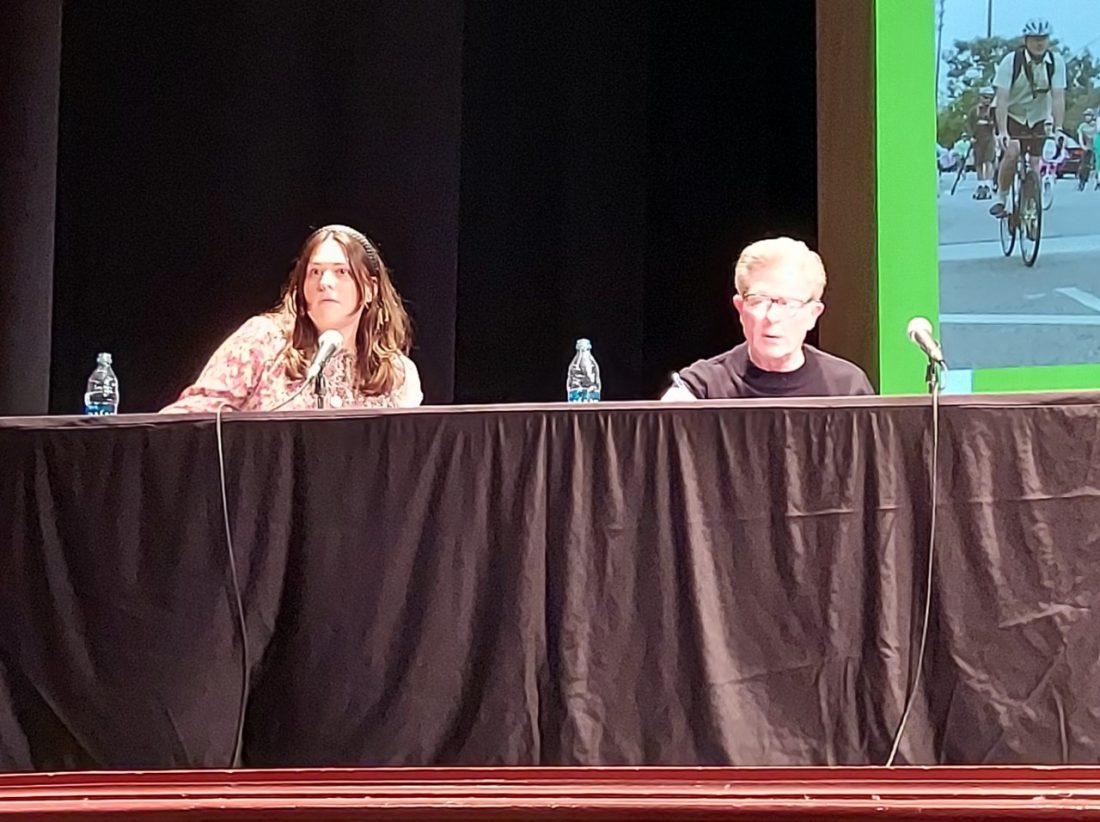
Kevin Kearns, right, and Rebecca Wurster both offered presentations at a forum Thursday about Complete Streets initiatives in Dunkirk and Fredonia.
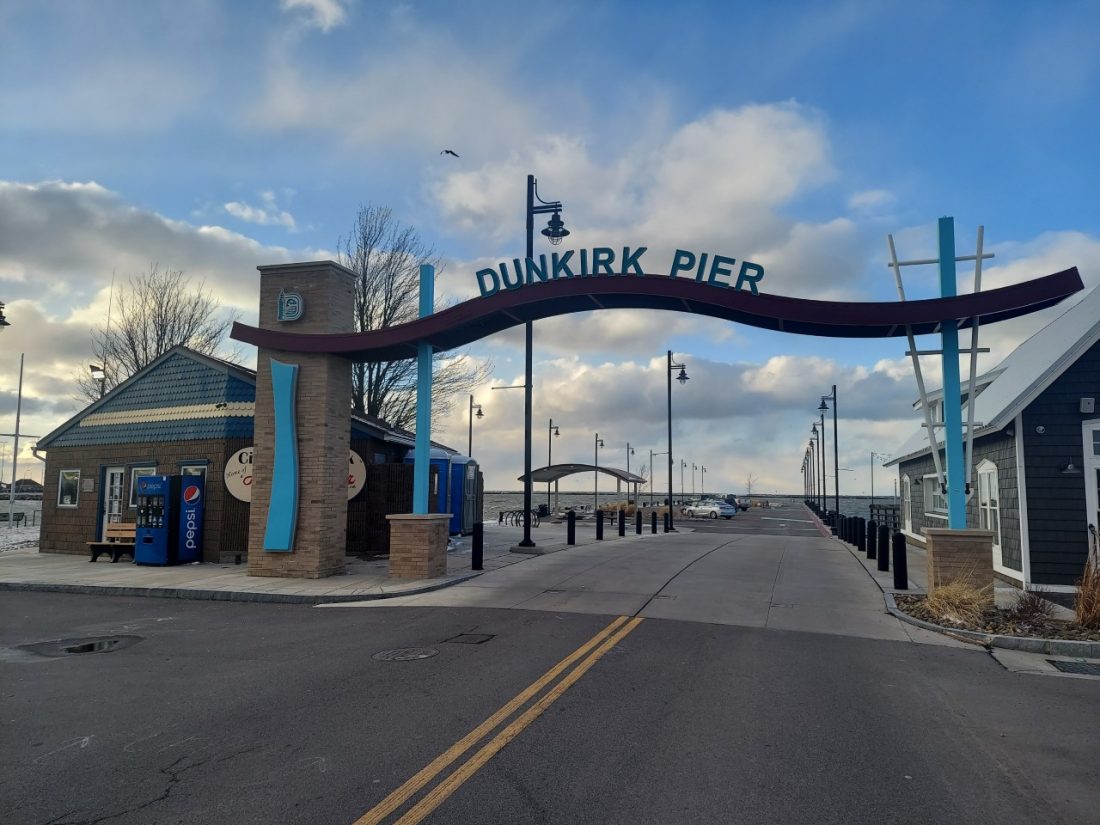
OBSERVER Photos by M.J. Stafford The Dunkirk Pier is an integral part of the Central Connection between the city of Dunkirk, SUNY Fredonia and the village of Fredonia.
Kevin Kearns, right, and Rebecca Wurster both offered presentations at a forum Thursday about Complete Streets initiatives in Dunkirk and Fredonia.
OBSERVER Photos by M.J. Stafford The Dunkirk Pier is an integral part of the Central Connection between the city of Dunkirk, SUNY Fredonia and the village of Fredonia.
Trending
Advocates of the Complete Streets ideology swooped into the Fredonia Opera House last week.
A forum on improving non-motorist access to local streets featured four speakers flying up, down, and all around the issue of making roadways, and public areas in general, more user friendly for pedestrians and cyclists.
Kevin Kearns, a longtime SUNY Fredonia administrator who is currently a special assistant to President Stephen Kolison, explained Central Connection, a local first step in the Complete Streets push. He called it an early example, a collaborative effort between the city of Dunkirk, village of Fredonia and SUNY Fredonia.
"It's a road map for investment and development along Central Avenue," and a recognition among the three entities that collaborative efforts are more likely to result in grant funding, Kearns said.
"The bottom line was to try to co-brand the area as opposed to competing for resources individually," he said.
The point of Central Connection was to increase investments, help build long-term partnerships and build excitement in the community, he said.
Kearns called it a "successful early effort" that led to improvements at the Dunkirk Pier and Barker Common in Fredonia, along with branded signage all along Central Avenue and a series of community bike rides.
Complete Streets design principles must be considered for New York State Department of Transportation projects with federal and state funding, according to James Cuozzo, a DOT planner. All road users -- walkers and cyclists, not just motorists -- must be considered in projects that fall under this rule, approved in 2011 by the state, he continued.
Rebecca Wurster, a Chautauqua County planner, said Complete Streets initiatives are supposed to offer both health and economic benefits to communities. They are meant to attract people, leading to business investments. She held out Niagara Street in Buffalo as an area that is booming due to Complete Streets work, which attracted significant mixed-use development.
The idea is to make streets less confusing and more efficient, and offer more space for cyclists and pedestrians, Wurster continued. "It's not required for every street and road and it really depends on the community's needs and requirements," she said.
The other speaker was Justin Booth, executive director of GoBikeBuffalo. He said that preliminary projects can be done relatively cheaply, such as painting lines to designate bicycle lanes. He advocated that such work be done as a way to enact Complete Streets principles before grant funding comes in.
Street design is extremely important, he said. "How are we designing our streets better but how are we maintaining them once they are built?"
The speakers accepted questions from the audience after their presentations. The first query asked if Complete Streets was manageable in a winter climate, such as what this area has.
"Many communities across the globe invest in Complete Streets and invest in maintaining them around the year," said Booth, holding out Minneapolis as an example. "It's not about the weather, it's about making sure it's safe in all seasons."
Kearns said, "The locality has to spend the money to maintain all these projects once they are developed."
Responding to a later question, forum members generally agreed that road striping and signage are the obvious "low-hanging fruit," the best bets for easy, cheap and quick projects.
Booth received applause for his answers to a question about protecting pedestrians on crosswalks. "It should be about people first, not how quickly we move cars," he said, calling for a refocus of transportation policies.