
Trending
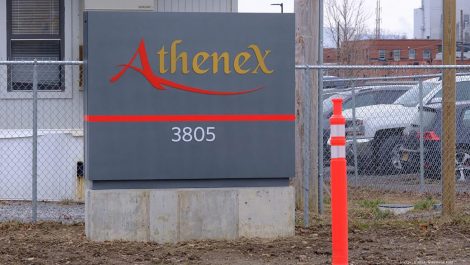
Athenex is on track to begin operations at its Dunkirk facility this fall.
The news was discussed by company officials during a conference call late last week with investor analysts.
"Construction of our facility in Dunkirk, New York, is essentially complete," said Jeff Yordon, Athenex chief operating officer. "We have built eight dedicated bays for the expanded 503B business and plan to commence manufacturing there in Q4 2021. Our current capacity at our clearance facility is fully utilized, and these new bays will substantially increase our capacity."
The 503B portion of the company's business generated $1.5 million in revenue in the three months that ended June 30, 2021, and Athenex officials say bringing the Dunkirk facility online will help increase that segment of the company's business. Yordon said new products, more inventory as the COVID-19 pandemic improves in China and India, better shipping options from India and China, potential sales of shortage products and the potential of a new wave of COVID-related cases could improve product-related revenues.
Athenex's sales in the second quarter of 2021 dipped compared to the second quarter of 2020 in part because COVID-19 vaccinations have decreased the need for the company's COVID-19 treatments. The company's revenues from product sales decreased from $40.2 million for the three months ending June 30, 2020, to $21.4 million for the same period in 2021. The decrease was attributable to a $20.4 million decline in product sales that company officials say was prompted by decreased demand for COVID-19 related drugs from 2020 to 2021, including some significant non-recurring orders of $14.1 million.
The pandemic hurt the company in other ways, too, as it experienced significant COVID-related challenges in its supply chain from India and, to a lesser extent, China which kept Athenex from receiving some inventory. Athenex also experienced a higher amount of product sales in 2020 as it started fulfilling demand for certain drugs used to treat patients hospitalized with COVID and demand for FDA shortage products. As a result, the product revenues in the second quarter of last year were particularly high, given the COVID pandemic had just started, company officials said. Fluctuations in the infection rate and the spread of the global health pandemic and market demand may continue to significantly affect Athenex's product sales in the future.
"As Jeff (Yordon) mentioned, product sales this quarter were affected by a decrease in demand for COVID-19-related drugs compared to last year," said Randoll Sze, Athenexes' outgoing CFO. "In the second quarter of 2020, the COVID pandemic just started, and we also recorded some significant nonrecurring orders of approximately $14.1 million. In the first half of 2021, we also experienced COVID-related challenges in our Indian and China supply chains, affecting the amount of inventories we could receive from our partners in these regions."
Net loss attributable to Athenex for the three months ended June 30, 2021, was $34.3 million, or 33 cents per diluted share, compared to a net loss of $40.5 million, or 50 cents per diluted share, in the same period last year. As of June 30, 2021, the company had cash and cash equivalents of $76.9 million, restricted cash of $16.5 million, and short-term investments of $53.3 million. As of June 30, 2021, Athenex had cash and cash equivalents, restricted cash and short-term investments of $146.7 million. As the company deals with uncertainty stemming from the approval process for oral paclitaxel, Athenex identified and adopted certain cash conservation measures. The Company now expects that its cash and cash equivalents, restricted cash and short-term investments as of June 30, 2021, will enable it to meet its current operational liquidity needs and fund operations into the fourth quarter of 2022.
Founded in 2003, Athenex, Inc. is a global clinical stage biopharmaceutical company dedicated to becoming a leader in the discovery, development, and commercialization of next generation drugs for the treatment of cancer.