Senator Zellnor proposes climate negligence bill
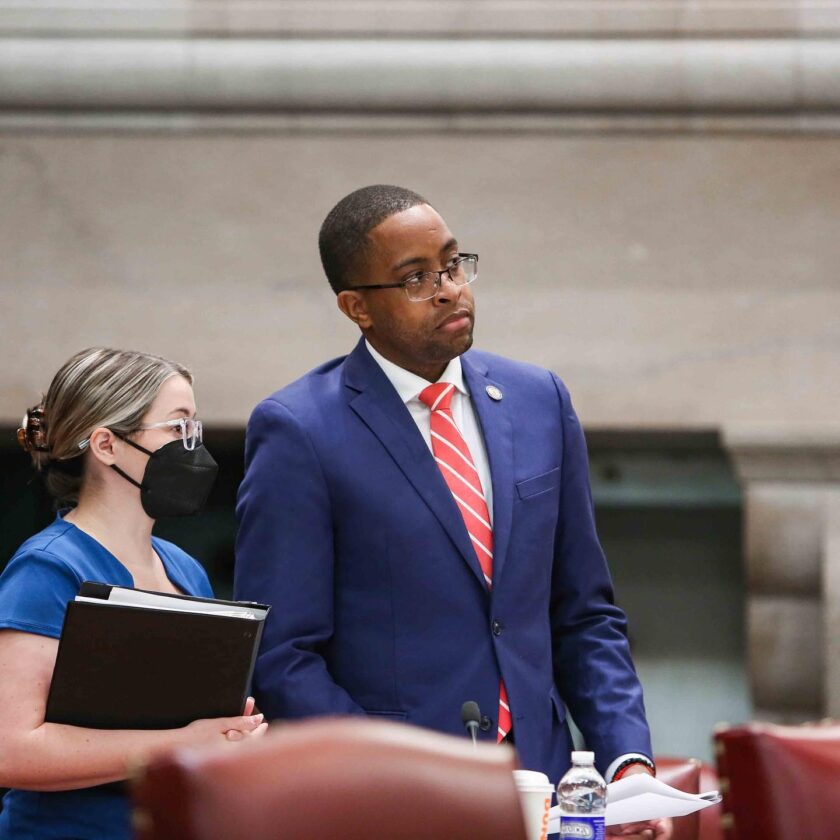
Sen. Zellnor Myrie, D-Brooklyn, is pictured at the state Capitol earlier this year.
As the legal fight over who pays for climate change heats up in courtrooms across the country, a New York senator wants to create a right to file civil suits against fossil fuel companies.
Sen. Zellnor Myrie, D-Brooklyn, recently introduced S.9612 in the state Senate. The bill would allow any person, firm, corporation, or association to bring civil lawsuits seeking damages against the fossil fuel industry under a charge of climate negligence. The bill would allow lawsuits against a person, firm, corporation, company, partnership, society, joint stock company or any other entity or association with total annual revenues of more than $1 billion in industries that include crude petroleum oil, the oil and gas industry, companies handling physical waste generated by fossil fuel companies. It would require that no fossil fuel industry member knowingly or recklessly create, maintain or contribute to a condition in New York state that endangers the safety or health of the public in extracting, storing, transporting, refining, importing, exporting, producing, manufacturing, distributing, marketing or selling a fossil fuel product.
Lawsuits would be brought in the state Supreme Court in the county where the damage happened.
According to a Pew Charitable Trusts report from earlier this year, nearly two dozen state, cities and counties — including the city and county of Boulder, Colo., and the city of Baltimore — have filed suits fossil fuel companies. The lawsuits seek payment from fossil fuel companies for damages caused by climate change like rising sea levels, wildfires, drought, flooding and severe weather. Backers of the lawsuits liken the lawsuits to lawsuits against tobacco companies and drug manufacturers. Myrie’s legislation takes that movement a step further by allowing private citizens to file their own suits in state courts.
“There is no credible debate on the effects of climate change. The oil and gas industry, having finally ceded this fact has fought accountability in the courts in a myriad of ways, including keeping actions out of state court, or claiming that their decades of deception to the public on the true impact of their products was “political speech” meant to influence government decisions. This bill aims to hold them accountable on both fronts,” Myrie wrote in his legislative justification.
A 2019 lawsuit filed by Massachusetts Attorney General Maura Healey alleges Exxon launched an effort, “reminiscent of the tobacco industry’s long denial campaign about the dangerous effects of cigarettes,” to deceive consumers and investors about climate change. Massachusetts’ Supreme Judicial Court upheld a lower court ruling that rejected the company’s argument that a state law shielded it from the lawsuit.
In a congressional hearing last year, the company’s CEO, Darren Woods, told lawmakers that its public statements on climate “are and have always been truthful” and that Exxon has “long acknowledged the reality and risks of climate change” and “devoted significant resources to addressing those risks.” The Massachusetts lawsuit says Exxon engaged in a “sophisticated, multi-million dollar campaign” to sow doubt in climate science and downplay the link between fossil fuels and climate change. The lawsuit says Exxon also undertook “greenwashing campaigns” in an effort to portray itself as environmentally responsible.
Lawyers for Exxon argued in court documents that the company’s statements about climate change and energy policy were “protected petitioning activity” even if they were made to defend the company’s reputation.
TOP STORIES

Sheriff’s Office designates deputy to focus on animal cruelty cases

Generational footprint
Son sues mother over 2024 death of father
A man has sued his mother over the 2024 death of his father at the Chautauqua County garbage transfer station on ...

Course changes spark debate in Fredonia

Councilwoman critical of mayor’s meeting Friday