
No magic can fix city’s disappearing funds
Trending
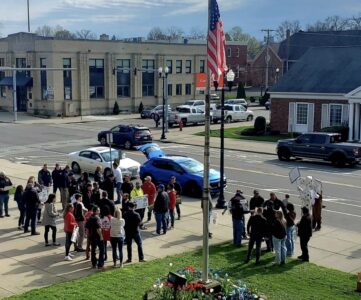
Dunkirk's fiscal frying pan became more like a broiler on Tuesday evening. Numerous city workers showed up in force at the Common Council meeting to voice their displeasure with the current administration, announcing "no confidence" votes in Mayor Kate Wdowiasz.
Labor advocates turned out in impressive numbers as well in a show of support for the employees. One of those leaders included Denise Abbott, president of the Western New York AFL-CIO.
"What I have been told by workers, union leaders, and city residents is that the environment of bullying, abuse and outright illegality are out of control here in Dunkirk," she said. "The mayor and an inactive council have allowed the purposeful undermining and mishandling of city resources, collective bargaining agreements, public safety, and the livelihoods of residents and workers alike."
Fire and police union officials also spoke out with concerns. There is no denying there is truth to their statements.
Then, however, there are the dark and unmistakable facts not discussed. Dunkirk is on financial life support -- through a $13.7 million loan from New York state last June and an underfunded $30 million budget.
It is quite possible the city will be out of cash in the fall. Then what? Another loan from Albany?
Workers have every right to portray the city and Wdowiasz as the villains. But this leadership team inherited the mess created by so many other past administrations and councils.
Since the closing of the NRG Energy Inc. plant in 2016, there never was a sense of insecurity inside City Hall -- even if $4 million in annual revenues were not coming to the municipality's coffers over nine years -- and city tax rates were rarely increased. Then came the crisis in March 2024 that included a $16 million deficit.
Portions of that now appear tied to the former treasurer's alleged theft of $120,000 in recent years. If that is the amount truly taken, then that is a drop in the bucket.
Mark Woods had access to hundreds of millions of dollars for the 25 years he had been elected to office by constituents. Rarely, especially in recent years, did he provide financial information to those elected.
An audit from Comptroller Thomas DiNapoli's office dating back to 2021 is one more indication of the potential harm done by that office. That audit stated, "The city treasurer did not properly enforce and the Common Council did not properly monitor delinquent water, sewer and tipping fee balances."
According to the report, Woods failed to follow the enforcement procedures prescribed by the city code and charge penalties in accordance with the code. Of the 30 accounts reviewed, approximately $39,700 in additional penalties should have been charged. "If city officials had implemented shut-off procedures in accordance with the code, the city could have collected more than $577,000 on delinquent accounts and realized an additional $31,200 in service resumption fees," the document said.
In 2021, those figures seemed trivial. That all changed in January when the public corruption, grand larceny and false filing charges were filed by DiNapoli and Chautauqua County District Attorney Jason Schmidt against Woods, whose reputation of being fair and honest has been more than tarnished.
If city workers think they have it bad now, the other option to get a better grip on city finances would make conditions even worse for them: a control board. In this case, the current contracts with the union become null and void. Everything -- pay, health benefits, pensions and minimum staffing levels -- gets scrutinized.
Money will get even tighter -- and unions lose a lot of leverage. Council and Wdowiasz are not endorsing that idea, but state Sen. George Borrello and Assemblyman Andrew Molitor believe that is the most responsible and accountable path for the municipality.
What residents here cannot forget is while Dunkirk has it bad, other parts of the nation are struggling as well. Government and schools, unfortunately, became gluttonous with the Coronavirus Aid Relief and Economic Securities Act from 2020 and the American Rescue Plan Act funding from 2021.
Federal cash came fast. It needed to be spent -- or it would be lost. Consequences of decisions that came with the infusion of free money six years ago are not restricted to New York state.
South Hadley, Mass., certainly understands the pain. There, voters this month rejected a steep property tax hike proposal of 50% that officials said was needed to avert deep cuts and ease a financial crunch similar to ones expected to hit more towns around the U.S. The Wall Street Journal reported the measure was defeated by 65% to 34% to raise $11 million in new property taxes.
Lisa Wong, South Hadley's administrator, said she wasn't surprised by the results. "It was definitely a big ask of voters who are dealing with a lot," she told the Journal. "We will regroup and continue to communicate with the public on the changes ahead."
Dunkirk's 2025 tax hike of 84% brought hardship to many residents -- more than 26% of whom are living in poverty. In addition, there is a growing number who are delinquent in paying their tax bills. An oversized $30 million city budget -- that shows no sign of shrinking -- will do that.
Union members at this week's meeting have every right to believe they're not being treated fairly. On the other side is the stark and unfortunate reality.
Dunkirk's tax base is stagnating and there is a lack of investment. Continued overspending in the city will not change future fortunes.
John D'Agostino is the editor of The Post-Journal, OBSERVER and Times Observer in Warren, Pa. Send comments to jdagostino@observertoday.com or call 716-487-1111, ext. 253.