
Healing with Horses: Constant caregiving overload takes emotional toll
Constant caregiving overload takes emotional toll
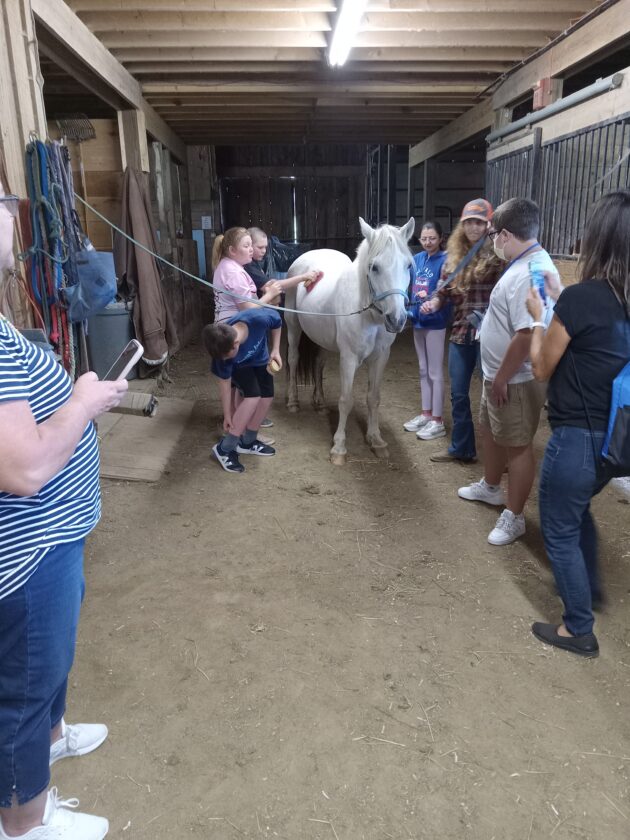
Mrs. Harris' Westfield Academy & Central School class learns to groom horses after they completed their volunteer tasks.
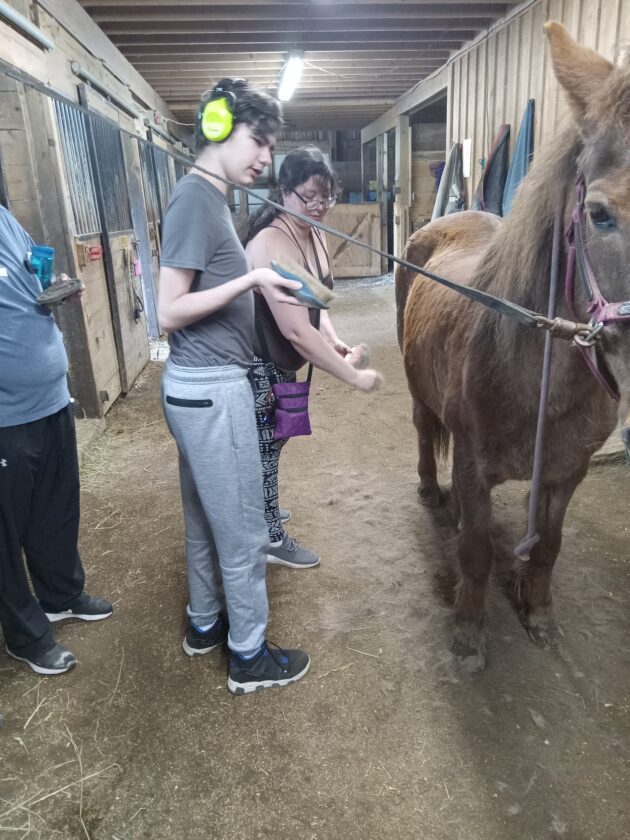
A participant becomes comfortable connecting with the horse.
Mrs. Harris' Westfield Academy & Central School class learns to groom horses after they completed their volunteer tasks.
A participant becomes comfortable connecting with the horse.
Trending
How much of caregiver burnout is from fighting the government bureaucracy or trying to find ways for their child (whatever age) to fit into some structured purposeful and enjoyable functional role?
Parenting doesn't come with instructions. But it is the goal of every parent to help their child become independent, to spread their wings and fly, to become a contributing member of society, to pursue happiness and to live with dignity.
What does that look like raising a child with a disability? And what if that disability does not always appear on the surface? Judgment is fierce. And the goal of spreading their wings to fly is often unrealistic. There are so many children with no such realistic goal of leaving the nest with happiness or dignity on the horizon, or parental obligations relieved. Age is only a measure of time, not a milestone marker of independence.
Some disabilities are covert. Being a parent of a high functioning son finally diagnosed three years ago on the autistic spectrum, after four State appeals over a 20-year span and finally awarded a diagnosis at the Federal Court Level of Appeals, I feel the burnout from always fighting for some help. The paperwork adds stress to an already overloaded state of responsibility.
I spent most of his childhood and a good chunk of his adulthood trying to make life "more accommodating" for him, because he always had a very difficult time adapting to the constantly changing demands of social integration.
IEP's are a great tool (Individual Educational Plans). They made it possible for him to get through school. Unfortunately, it is much harder once a child with a disability is out of school, and even harder when there is "no diagnosis label".
Centaur Stride was founded with him in mind, to make a place that he could be himself, around horses, and his duties adapted to his abilities. He was very capable of assisting riders with physical disabilities, but just not 100% of the time. He had many days when he would shut down, and there was rarely any advance warning. Most of those times were when he didn't feel like life was fair. Or the demands were too intense. That was frequent.
For children on the spectrum, change is hard. Anxiety causes shutdown, a physical and mental condition of dysfunction. Chronic anxiety is often associated with Oppositional Defiance Disorder, and now a new disorder called Pathological Demand Avoidance. These are labels (secondary diagnoses) that parents with children with Autism can readily describe. Research is studying the imbalances of neurotransmitters (including hormones) that may affect these uncontrollable behaviors.
In "mild" cases, this dysfunction is not often seen in public. It is not even present 100% of the time. But it is just under the surface ready to take over at any second. Coping skills are critical. Experience helps to practice those skills. Those with moderate to severe autism are rarely out in public. It is just too hard on everyone.
How does one find those experiential opportunities? Centaur Stride is all about hands-on experiential learning. The horse is the connection that makes it fun and therapeutic. The benefits of riding and being around the horse have been studied over the last 60 years and the results are undeniable.
Besides riding the horse, which helps the brain organize sensory input and motor responses, as well as balance hormones, Centaur Stride has strived to address so many of the other needs of people with disabilities and their families. Inclusion and integration are at the top of the list.
Volunteering is also at the top of the list. People with disabilities need opportunities to volunteer. But they need direction, supervision and adaptation of tasks. Who pays for staff to make these opportunities possible?
Last year, Centaur Stride received a $1,000 grant from the Westfield Fund to help cover these expenses. This year, we received a $400 award from the Northern Chautauqua Community Foundation Lyford-Gugino grant to continue the program.
Anyone with a disability over the age of 13 can participate in the program. It is a place that caregivers or self-direction aides can bring their individuals for some experiential hands-on learning, for free until the grant funds are used. The program teaches responsibility, time management, following directions, and job skills all while benefiting from the powerful connection to horses. Call the barn to schedule a time to participate in this program (716) 326-4318.
Caregiver burnout is real! One step forward and then two steps back. Who's on first?
Claudia Monroe is founder and president of Centaur Stride.