
Beneath the bloom on Chautauqua Lake waters
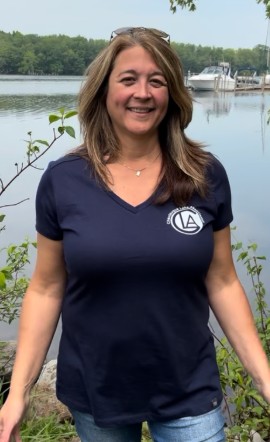
As general manager of the Chautauqua Lake Association since August 2025, Heather Nolan-Caskey has introduced project management, in-lake operations and community service initiatives, along with oversight of the Watercraft Steward Program.
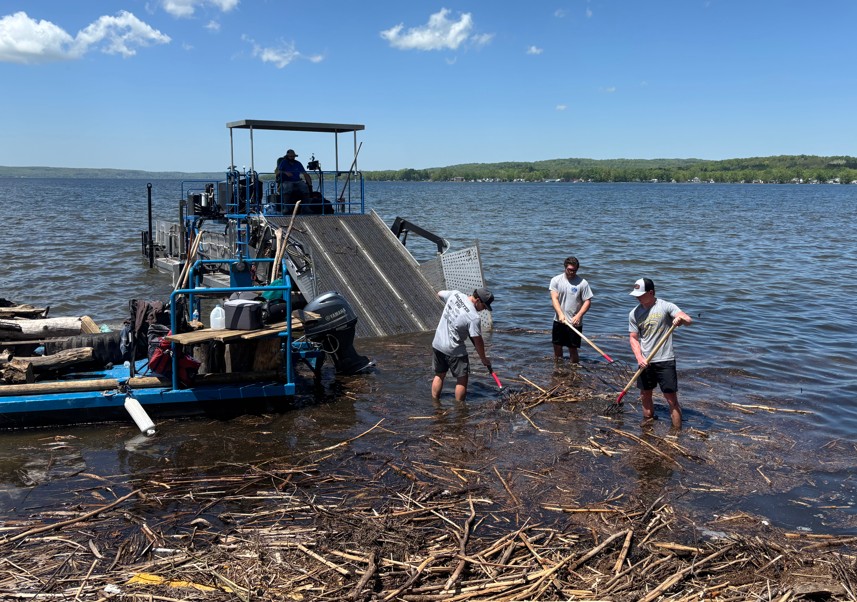
Shoreline crews have already initiated clearing woody debris from Chautauqua Lake, including assisting landowners with this cleanup chore.
As general manager of the Chautauqua Lake Association since August 2025, Heather Nolan-Caskey has introduced project management, in-lake operations and community service initiatives, along with oversight of the Watercraft Steward Program.
Shoreline crews have already initiated clearing woody debris from Chautauqua Lake, including assisting landowners with this cleanup chore.
Trending
As a kid, spring was the most special place my dad could take me at 5 years old. Crappies, perch, bullheads and bass were plentiful as we cast a line from shore near the old train station and boat docks in Mayville. Traveling down the lake to Jamestown, the lake appeared pristine.
That was 70-plus years ago. Today, by early summer, it's still easy to see the beauty of Chautauqua Lake, but now there is also strain.
Morning light stretches across the water. Boats ease out from docks. Anglers cast into familiar spots. But just beneath the surface, especially in the lake's southern basin, thick vegetation sways and wobbles with the wave currents, and in the warmest months, blooms of algae can turn stretches of water an unmistakable green color. Chautauqua Lake is not alone.
But here, today, this is the reality of a lake shaped by both natural forces and decades of nutrient buildup. Phosphorus entering the watershed from runoff, legacy sediments, and development continues to fuel plant growth and harmful algal blooms (HABs). The result is a system that requires constant, coordinated management to remain usable and healthy. From what I can tell, that effort is anything but small. Thank goodness for the Chautauqua Lake Association (CLA).
In 2025, crews from the CLA removed 24,378,000 pounds of nuisance vegetation from the lake. That staggering figure -- equivalent to more than 12,000 tons -- reflects months of work carried out from June through October, when harvesting operations run daily to keep waterways open. The CLA has been at work since 1953!
On the water, the process is both methodical and relentless. Mechanical harvesters cut through dense plant beds, collecting and transporting vegetation to shore. From there, it's offloaded, hauled away, and managed -- day after day, load after load. By season's end, an estimated 12,189 tons of vegetation had been removed, restoring access for boaters and improving conditions across heavily impacted areas.
The message I get from the CLA website is that the work doesn't begin in summer. In the shoulder months of April and May (right now), crews are already active -- this time along shorelines and tributaries. In 2025, that meant removing 40 truckloads of woody debris and invasive knotweed, clearing material that would otherwise contribute to nutrient loading, obstruct water flow and endanger boating.
Still, even with this level of effort, those involved are clear-eyed about what harvesting can and cannot do. "It's essential work," many will tell you -- but it's also temporary. Cut the plants, and they grow back. Addressing the root of the problem means looking beyond the lake itself. That's where a broader strategy comes into focus.
Selective herbicide treatments, permitted and carefully monitored by New York State DEC, are used to target specific invasive species like Eurasian watermilfoil and curly-leaf pondweed. These treatments are designed to complement -- not replace -- mechanical harvesting, offering another tool in a limited but necessary toolkit. We learned last week that DEC's Freshwater Wetlands Act regulations that took effect Jan. 1, 2025, have been annulled, perhaps adding to a new weed management direction in the future.
At the same time, prevention has become a major front in the fight. From May through September, the CLA's Watercraft Steward Program meets lake users where they are -- at boat launches, marinas, and access points.
In 2025, stewards conducted 12,548 voluntary vessel inspections and reached 26,894 people with hands-on education about invasive species. Those moments -- quick conversations, a look inside a livewell, a reminder to clean and dry equipment -- may seem small. We were inspected a few times. But collectively, they represent one of the most effective ways to slow the spread of new threats before they take hold.
Beyond the shoreline, attention is increasingly focused upstream. Efforts to reduce nutrient inputs across the watershed -- through improved stormwater management, wetland protection, shoreline stabilization, and expanded sewer infrastructure -- aim to tackle the problem at its source. It's slower, less visible work, but widely considered the key to long-term improvement.
Science, too, is playing a larger role than ever before. Ongoing monitoring and research are helping to map how nutrients move through the system, how weather patterns influence blooms, and where interventions can be most effective. This growing body of knowledge is shaping decisions in real time and refining strategies for the future. I do, however, consider that there is a time to study and time to spend to affect meaningful results, not year-after-year study. Use the money where it works.
For the CLA, this balance between experience and adaptation defines the work ahead. With spring in gear now, planning for the 2026 season is already underway. Each year brings new variables -- weather patterns, continuous funding pressures, shifting conditions -- but also a deeper understanding of what works. As General Manager Heather Nolan-Caskey emphasizes, this is "familiar work," built on decades of hands-on experience and strengthened by collaboration and community support.
That support remains critical. Operating costs continue to rise, from equipment and maintenance to staffing and fuel. Sustaining a large-scale effort like this requires not only coordination and expertise, but consistent investment. Community contributions help ensure that crews can respond to changing conditions, maintain equipment, and remain ready throughout the season. In the end, there is no single fix for Chautauqua Lake (and many other lakes). There is only the work -- ongoing, evolving, and shared.
It happens in the steady pass of a harvester cutting through thick weeds. In a steward's conversation at a boat launch. In a restored shoreline or a redesigned drainage system miles from the water's edge. And in the collective understanding that protecting this lake will take time, persistence, cooperation and volunteers.
Contact the CLA to ask if you can help. They need plant surveyor's (you can be trained), weed cutter operators, and much more. Visit https://www.chautauqualakeassociation.org or call 716-763-8602.
On a calm summer morning, it's still possible to see the lake as it's always been -- open, inviting, alive with activity, and fish willing to bite. The goal continues to be that we must make sure it stays that way.
Gotta love the outdoors.
Calendar
May 4: Chautauqua County Sportsmen Annual Federation Banquet, Lakewood Rod and Gun, 433 East Terrace, Lakewood.
May 5: 3D Archery Summer League, Allied Sportsmen, 12846 Clinton, Alden, 16 weeks, 5:30 p.m. registration, Info: John, 716-725-5822.
May 5: Children in the Stream, Youth Fly Fishing program, free, Costello Room, Rockefeller Art Center, SUNY Fredonia, 7-8:30 p.m., 12 years old and older, info: 716-410-7003 (Alberto Rey).
Submit calendar items to forrestfisher35@yahoo.com at least 10 days in advance.