
Workshop to seek input on shoreline protection
Trending
A community workshop to gather feedback on proposed Wright Park shoreline protection is set for Wednesday in Dunkirk.
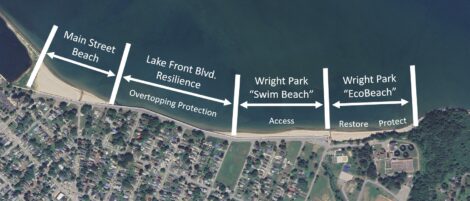
Buffalo Niagara Waterkeeper and the city of Dunkirk will host the workshop 5 p.m. Wednesday at the SUNY Fredonia Center for Innovation and Economic Development at 214 Central Ave. Thoughts are sought on designs for restoration improvements and shoreline protection in three areas of Wright Park Beach: the ecological/habitat beach, Main Street/Lakefront Boulevard, and the public swimming access beach.
The Wright Park Beach Shoreline Naturalization and Protection Project will focus on restoring and stabilizing the shoreline, bluffs, and habitat at Wright Park Beach. This popular Lake Erie destination has faced significant erosion from stormwater, lake level fluctuations, and waves as high as 30 feet -- damaging infrastructure and threatening the city's wastewater treatment plant.
In 2025, Dunkirk launched the design phase of this major shoreline protection effort in partnership with the Great Lakes and St. Lawrence Cities Initiative (Cities Initiative), LimnoTech and SmithGroup, as part of the Cities Initiative's Resilient Coastal Projects Initiative with funding from the National Fish and Wildlife Foundation. Outreach and community discussion for the project is being facilitated by Buffalo Niagara Waterkeeper.
Dunkirk Director of Planning and Development Vince DeJoy said: "The Great Lakes St. Lawrence Cities Initiative, through this conceptual design project for the protection of Dunkirk's most available natural asset at Wright Park Beach and our critical infrastructure, needs to hear from our citizens as the design team completes this phase and moves to the design and engineering phase for Wright Park Beach and Lake Front Boulevard. I encourage all Dunkirk citizens to provide input at this important meeting that will guide the design team and the future protection of Dunkirk's beautiful lake front and beach."
Buffalo Niagara Waterkeeper Executive Director Jill Jedlicka said: "Protection of important public infrastructure and natural ecosystems are not mutually exclusive, and our Western New York communities are becoming leaders in this kind of resiliency work in the Great Lakes. The best projects are the ones that rely on sound science, direct observation, local knowledge and are informed and guided by public input and discussion. We are thrilled to be able to work with our partners in the City of Dunkirk and the GLSCI, who also understand the value of meaningfully engaging our local communities in Great Lakes resiliency efforts."
President and CEO of the Great Lakes and St. Lawrence Cities Initiative Jonathan Altenberg said: "We are proud to support Dunkirk in protecting critical shoreline infrastructure while enhancing the benefits Wright Park Beach provides to residents and visitors. Projects like this demonstrate how communities can strengthen resilience to severe weather while making the most of the Great Lakes as a vital economic and environmental asset. We look forward to advancing this work toward implementation."
Registration for the event is encouraged, but not required. Visit bnwaterkeeper.org/Dunkirk online to register.
Buffalo Niagara Waterkeeper is a community-based non-profit organization that protects and restores our waters and surrounding ecosystems for the benefit of current and future generations. For over 35 years, Buffalo Niagara Waterkeeper has been the guardian of Western New York’s fresh water, protecting clean water, restoring the health of ecosystems, connecting people to the water and inspiring sustainable economic growth and community engagement. For more information on Buffalo Niagara Waterkeeper, visit www.bnwaterkeeper.org.
Launched by the Great Lakes and St. Lawrence Cities Initiative in 2021, the RCPI responds to growing challenges from coastal hazards such as flooding and erosion, which threaten public safety, municipal infrastructure, and natural ecosystems across the Great Lakes and St. Lawrence region. Since its inception, the program has secured nearly $18 million -- primarily through federal funding -- to help cities plan sustainable, fundable coastal projects.
To date, the Cities Initiative has supported nearly 80 municipalities under RCPI. Funding for this work is provided by the National Fish and Wildlife Foundation, with support from the Bipartisan Infrastructure Law and the National Oceanic and Atmospheric Administration (NOAA).
To learn more about the Resilient Coastal Projects Initiative, visit:
glslcities.org/initiatives/resilient-coastal-projects-initiative
The Great Lakes and St. Lawrence Cities Initiative is a multinational coalition of municipal and Indigenous government executives representing communities in the Great Lakes and St. Lawrence River Region who are working to promote economic prosperity in our communities and protect our fresh water for the benefit of current and future generations. With more than 425 member communities, the Cities Initiative is leading the way in advancing the environmental, economic, and social health of the region by addressing issues impacting its residents.