
Legislators pitch highway animal crossing study
-
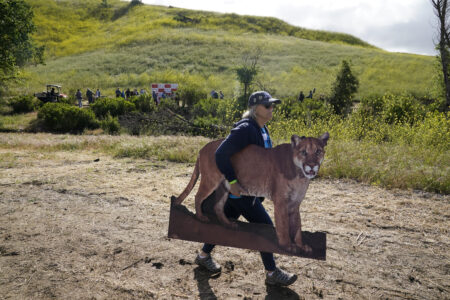
- AP Photos Amy Silver, a volunteer with the National Wildlife Federation, carries a cardboard cutout of a mountain lion during a ground breaking ceremony for the Wallis Annenberg Wildlife Crossing in April.
-
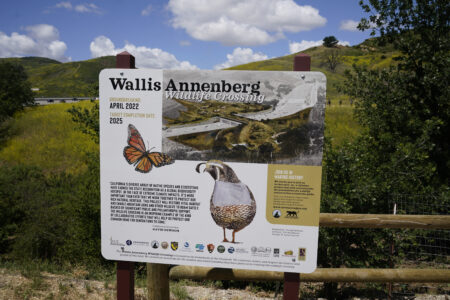
- A sign shows an image of what the finished Wallis Annenberg Wildlife Crossing would look like during a ground breaking ceremony in April. Construction has begun on what’s billed as the world’s largest wildlife crossing for mountain lions and other animals caught in Southern California’s urban sprawl. Officials held a ceremony Friday to mark the construction of a $90 million bridge over the 101 freeway and feeder road near downtown Los Angeles.
-
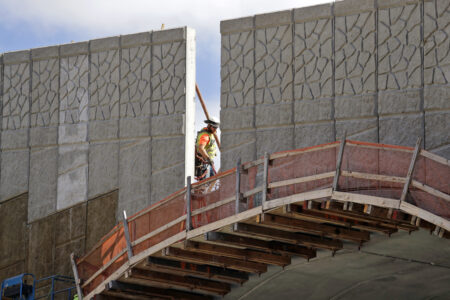
- AP Photos In this photo taken Oct. 4, 2018, a worker walks past a gap where tall panels are being erected on a wildlife bridge under construction over Interstate 90 on Snoqualmie Pass, Wash.
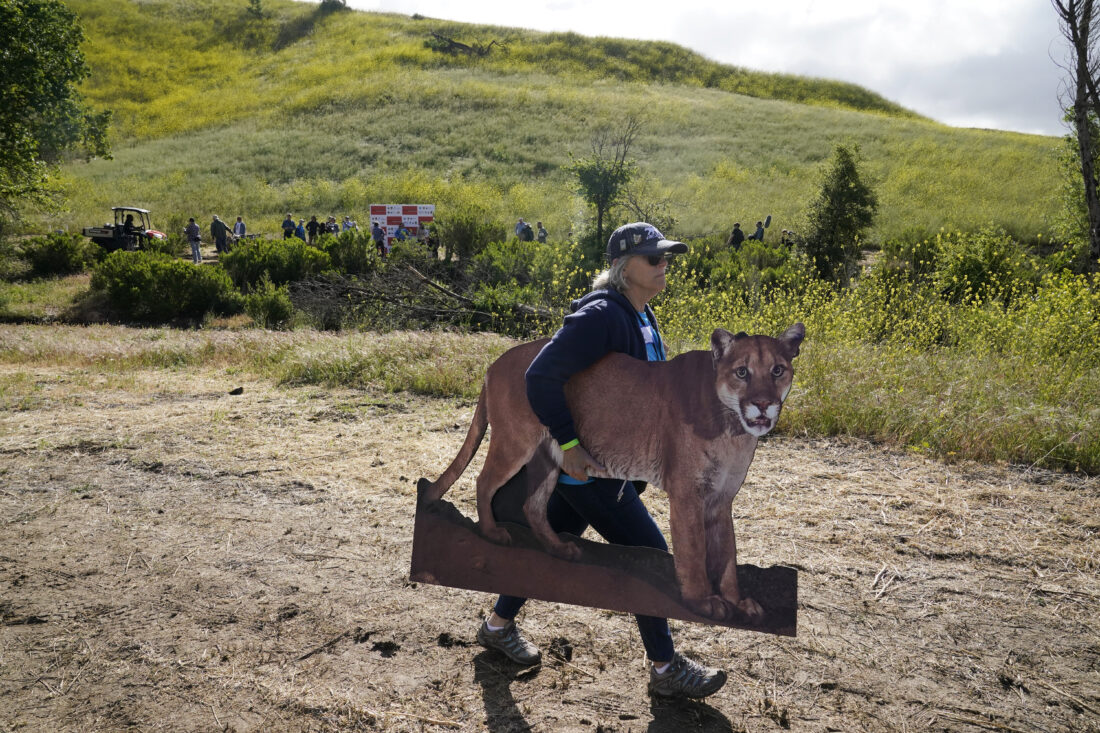
AP Photos Amy Silver, a volunteer with the National Wildlife Federation, carries a cardboard cutout of a mountain lion during a ground breaking ceremony for the Wallis Annenberg Wildlife Crossing in April.
A pair of state legislators want the state DEC to study potential sites along highways and thruways for wildlife crossings.
Assemblyman Robert Carroll, D-Brooklyn, and Sen. Leroy Comrie, D-Queens, have introduced A.10533/S.8579 directing the DEC to conduct the study and to direct the state Transportation Department to report on the fiscal impact of the study’s recommendations. The bill could be discussed in 2023 when the state Legislature returns to session.
“This bill aims to study the potential advent of wildlife crossings in New York state,” Comrie and Carroll wrote in their legislative justification. “Roadkill is a serious problem in motor transportation. Crossing deer and other large mammals can create life-threatening hazards on roadways. In the United States alone, there are more than a million automobile accidents per year involving wildlife, racking up more than $8 billion in medical costs and vehicle repairs annually. According to some estimates, automobile collisions kill more than a million animals every day, making them the leading cause of death for many vertebrate species. Still worse is the way major roads and other forms of development can subdivide animal populations and fragment their habitats. Losing access to large areas of their living space makes it much harder for many woodland creatures to forage for food, find mates and carry on their genetic legacies.”
The federal Infrastructure Investment and Jobs Act of 2021 established a $350 million wildlife crossing safety program to be spent over five years on bridges, tunnels, culverts, fencing, and other infrastructure that will allow wildlife safe passage either under or over roads. The federal government is making $60 million a year available — the largest single federal allotment to animal crossings.
The AP reported in November that advances in GPS technology, such as collars affixed to deer, have made it possible to map animal migration routes with more accuracy, which has also led to solutions beyond road signs, such as fencing or highway crossings dedicated to wildlife, that can reduce collisions by 80%.
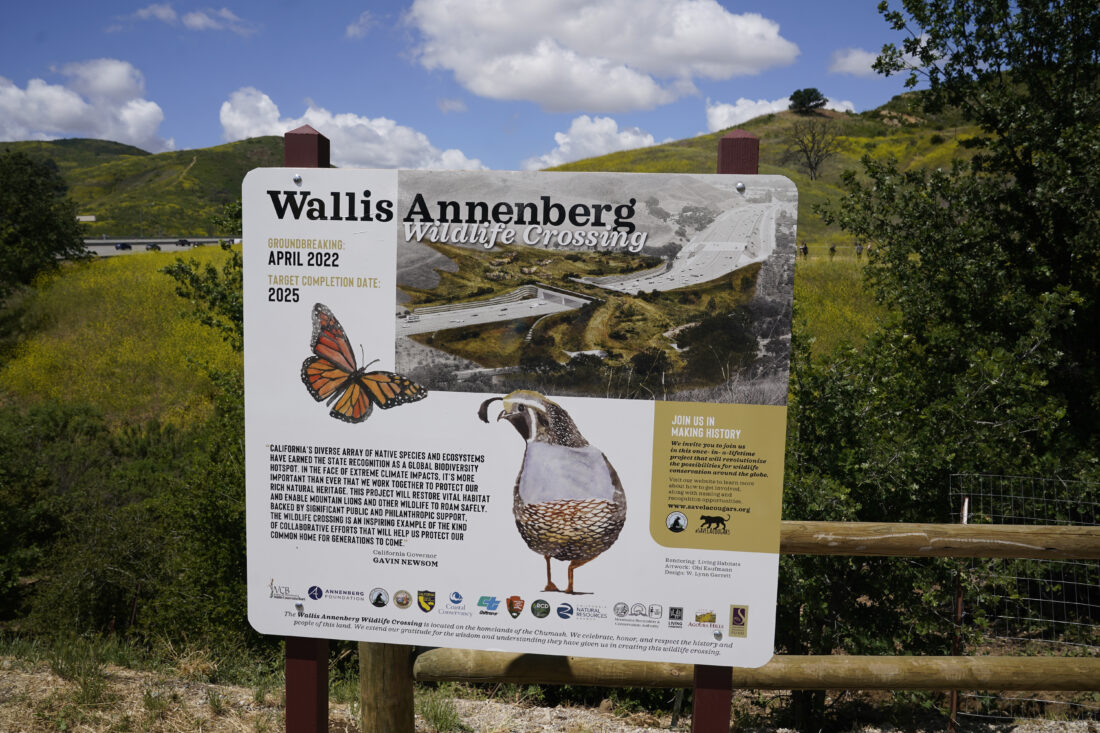
A sign shows an image of what the finished Wallis Annenberg Wildlife Crossing would look like during a ground breaking ceremony in April. Construction has begun on what’s billed as the world’s largest wildlife crossing for mountain lions and other animals caught in Southern California’s urban sprawl. Officials held a ceremony Friday to mark the construction of a $90 million bridge over the 101 freeway and feeder road near downtown Los Angeles.
Construction began in April, according to the Associated Press, on a $90 million wildlife crossing bridge for mountain lions and other animals over a freeway and feeder road that is about 35 miles northwest of downtown Los Angeles. The bridge will stretch 200 feet (61 meters) over U.S. 101 to give big cats, coyotes, deer and other wildlife a safe path to the nearby Santa Monica Mountains. It is expected to be completed by early 2025 and will be named the Wallis Annenberg Wildlife Crossing for the philanthropist whose foundation donated $25 million.
Thus far, Comrie and Carroll haven’t received much support from their fellow state legislators. Neither bill has a co-sponsor, making it unlikely the bill is advanced for committee discussion.
“These wildlife crossings reduce fatalities for both animals and humans alike. New York has the opportunity to be a leader in the United States on this issue,” they wrote.
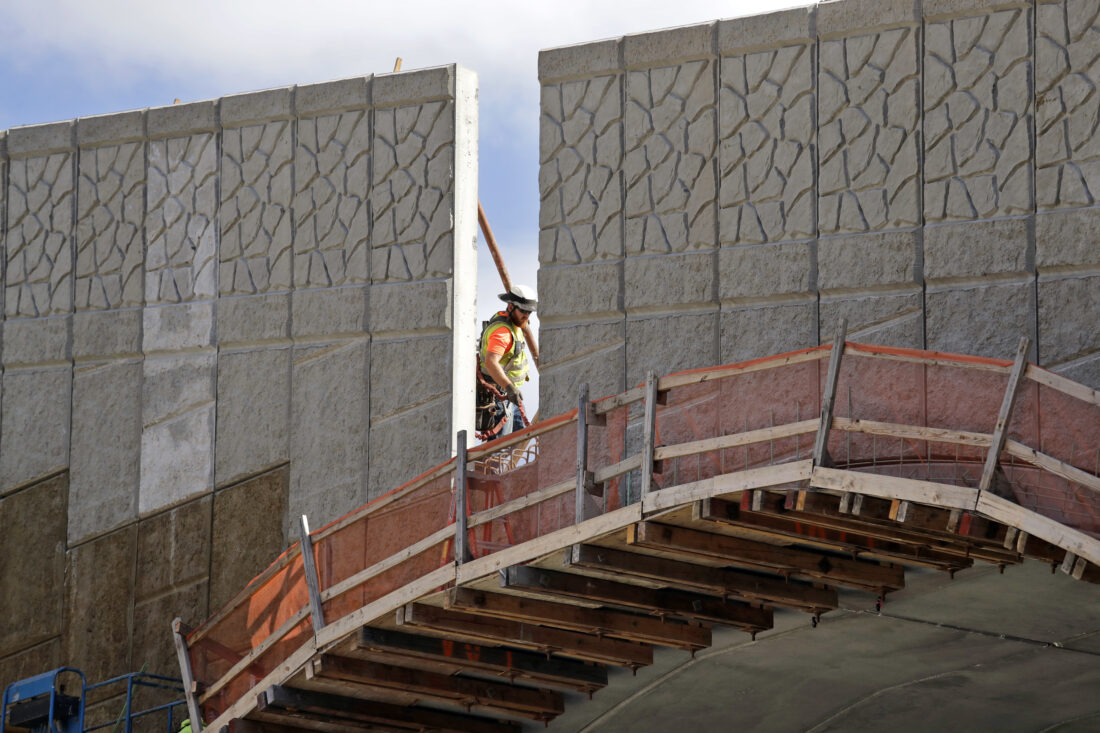
AP Photos In this photo taken Oct. 4, 2018, a worker walks past a gap where tall panels are being erected on a wildlife bridge under construction over Interstate 90 on Snoqualmie Pass, Wash.
TOP STORIES
Town of Pomfret wants lower speed on Fredonia-Stockton Road
The town of Pomfret is seeking a speed limit reduction on Fredonia-Stockton Road. The Pomfret Town Board agreed ...
Arkwright debates highway post

West to provide insight into ‘The Voice’ experience
Concerns raised over commercial chicken farms
Fredonia school board looks to reduce length of service
Real estate sales include Jamestown insurance agency building
A local independent insurance agency specializing in Medicare insurance no longer has its south county location. ...