
Torrent of detail flows at Fredonia water event
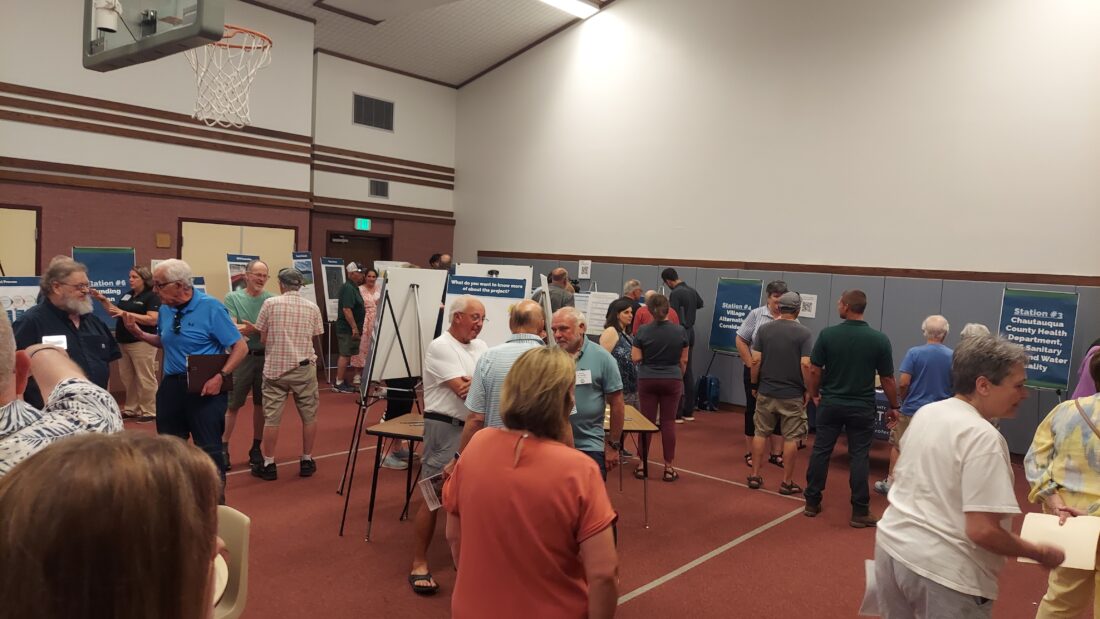
OBSERVER Photos by M.J. Stafford An overall view of the Fredonia water project information session, held Thursday.
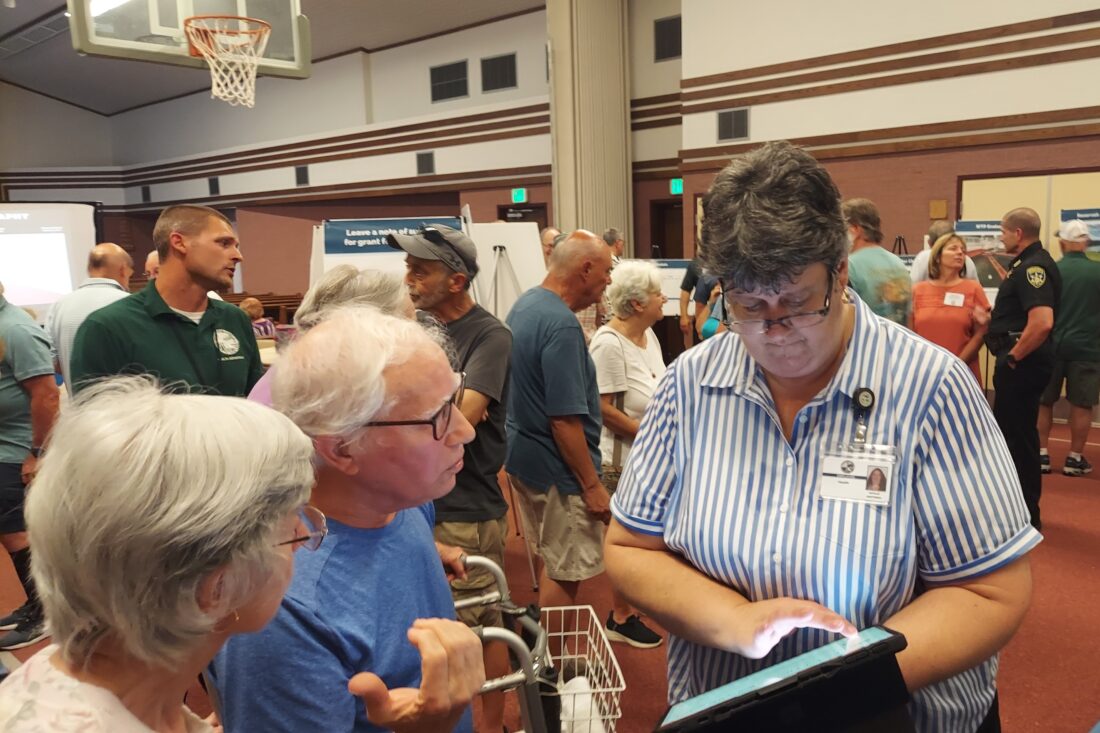
Natalie Whiteman, water quality specialist with the Chautauqua County Health Department, explains some data at Fredonia’s water project information session Thursday.
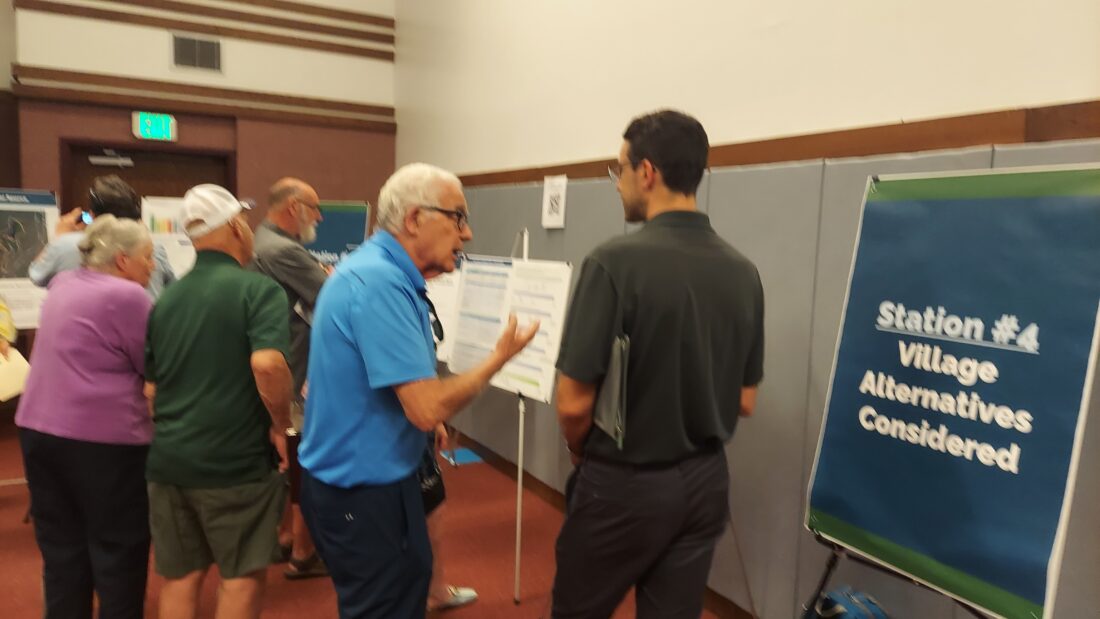
Fredonia’s Sam Drayo (left) questions a LaBella Engineering representative at a water project information session Thursday.
OBSERVER Photos by M.J. Stafford An overall view of the Fredonia water project information session, held Thursday.
Natalie Whiteman, water quality specialist with the Chautauqua County Health Department, explains some data at Fredonia’s water project information session Thursday.
Fredonia’s Sam Drayo (left) questions a LaBella Engineering representative at a water project information session Thursday.
Trending
Six stations defined Fredonia's water information session Thursday, an event that felt as much promotional as informational.
Village of Fredonia and Chautauqua County Health Department officials were joined by representatives of the LaBella Engineering firm, which is handling the planned connection with the North County Water District, in hosting the event. It was held at the town of Pomfret's new town hall building on Chestnut Road, which has not yet been renovated for its new purpose.
The building used to be a church, and the session was held in part of the former sanctuary where services were held. Dozens of sweaty Fredonians crammed together in the rear, behind the pews, centering around the six stations. The place had no air conditioning and many found it uncomfortably hot.
Despite the steamy atmosphere, the OBSERVER observed no bad behavior during its time in the sauna. Several in the community had expressed concerns about disruptive behavior at the event, but there didn't seem to be any of that. Chautauqua County Sheriff James Quattrone was mingling with the crowd, in uniform, just to make sure.
The stations described Fredonia's plans for NCWD connection -- but also seemed to belittle its current reservoir and dam. The village government plans to decommission the reservoir and dam when the NCWD hookup is complete.
Station 1 offered "nationwide context" about water systems and Station 2 described "existing municipal systems." It showed maps of the service areas for both Fredonia's water plant and the NCWD.
The third station featured Natalie Whiteman, a health department water specialist who has spoken in favor of NCWD connection in the past. Whiteman had a laptop flashing long lists of water quality data. At one point, she was heard to reassure an elderly couple that NCWD's source intake -- the city of Dunkirk's intake offshore of Lake Erie -- is well enough away from land to avoid any shore contaminants.
Station 4 contained the "Alternatives 1 and 2" from LaBella that were originally laid out years ago. Alternative 1 was to fix the reservoir and treatment plant and keep the village water-independent. Fredonia's Board of Trustees chose Alternative 2, attempting to set aside the plant and reservoir and acquire water elsewhere.
A placard contained the "Basis of Selection." The village's own water plant site has "significant constraints," its dam is classified with a high-hazard status, and the entire system has a "history of regulatory compliance challenges," the placard stated.
Another placard had a particularly interesting tidbit within the "Cost Comparison Exclusions and Assumptions" section. It stated that as of this month, it's assumed the village government will purchase 200,000 gallons a day from the NCWD at a rate of $5.27 per 1,000 gallons -- but increased 3% annually. The rest of the village's water would cost $6.50 per 1,000, also escalated 3% annually. Fredonia would then sell the NCWD water to its own customers.
The placard also noted the option to upgrade the village’s own treatment plant and reservoir would cost $6.9 million annually over 30 years, while the NCWD option is $6.7 million. The NCWD option used to have a higher estimated annual cost than the upgrade -- but officials now claim a lower debt service, because grant funding has been secured.
Station 5 was about the "Need for Project," containing placards with evaluations of the village's current treatment plant and reservoir. Both were pretty negative, citing the need for major renovations across multiple areas of concern.
The final station contained information about cost, funding and a timeline for the project. Construction is envisioned as beginning in the second quarter of 2028, with a final close out on the project in the fourth quarter of 2029.
"Phase 1" of the project is estimated to cost $17.5 million. What exactly that phase will entail did not seem to be explained.
However, the same placard stated there is a $12.5 million no-interest, 30-year loan coming from the New York State Environmental Facilities Corporation. There are also some $6,250,000 in grant funds available.