
Looking into the contamination of local fish
Trending
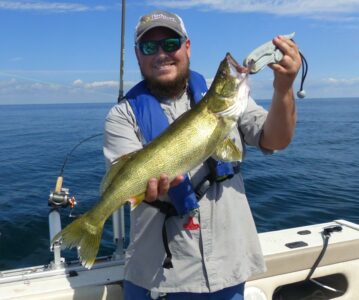
The New York State Department of Health (NYSDOH, not the NYSDEC) recently updated its waterbody-specific fish consumption advisory for Lake Erie walleye and yellow perch, reducing the recommendation from four meals per month to one meal per month.
The updated guidance reflects emerging scientific understanding of PFAS and PFOS contamination in fish. Like many of us, I have trusted the recommended guidelines from the NYSDOH for decades, cleaning fish to remove the skin, blood vein and belly flap. The result is tasty and healthy when prepared in a variety of ways. Like many, I wanted to know why the consumption advisory has been changed.
PFAS (per- and polyfluoroalkyl substances) are a large group of synthetic chemicals that have been used in industrial and consumer products since the late 1940s. PFOS is one of the better-known compounds within this class. These substances are commonly referred to as "forever chemicals" because many of them do not break down easily in the environment or the human body.
For more than 50 years now, PFAS compounds have been used in products designed to resist heat, stains, grease and water. Common examples include non-stick cookware, stain-resistant carpets and upholstery, waterproof clothing, food packaging, microwave popcorn bags, cosmetics, some dental floss products, paints, lubricants and certain cleaning products.
Scientific studies have detected PFAS contamination in water, soil, wildlife, fish, livestock and human blood samples worldwide -- polar bears too (how can that happen?). Research indicates that these chemicals can bio-accumulate over time in living organisms, including humans. According to the U.S. Environmental Protection Agency (EPA), certain PFAS exposures have been associated with increased health risks, including some cancers, immune system effects, elevated cholesterol, developmental concerns and other health conditions.
Concerns about PFAS are not limited to fish consumption. Researchers and regulators are increasingly examining potential contamination pathways involving agricultural land, livestock feed, fertilizers, food packaging and drinking water. Several dairy and livestock farms in parts of the United States have reported elevated PFAS contamination levels in recent years, resulting in restrictions or closures of their farmland for food products, curtailing their agricultural livelihoods, while investigations continue.
At the federal level through the EPA, the United States has established drinking water standards and environmental guidance for certain contamination chemicals, including PFAS chemicals. However, as of 2026, the U.S. Food and Drug Administration (FDA) and the U.S. Department of Agriculture have not established federal maximum PFAS levels (safety standards) for meat and poultry products, while the European Union has adopted some food-related PFAS standards.
Scientific background can be found in the 2022 report from the National Academies of Sciences, Engineering, and Medicine titled "Guidance on PFAS Exposure, Testing and Clinical Follow-Up." Visit https://www.nationalacademies.org. Additional public information about PFAS chemistry, environmental persistence, and current regulatory efforts is also available through the EPA at https://www.epa.gov/pfas/pfas-explained.
Individuals interested in measuring their personal PFAS exposure can consult their healthcare provider about available laboratory testing. Quest Health currently offers a PFAS blood serum test panel that measures nine PFAS compounds associated with potential health risks. The test is available without a prescription ($350 cost), though medical experts note that PFAS blood testing does not by itself diagnose illness or predict future disease. Visit https://www.questhealth.com/.
While updated fish advisories may raise understandable concern for anglers and consumers -- and tourism agencies, public health agencies emphasize that fish remain a valuable source of nutrition. Consumption advisories are intended to help people make informed decisions that reduce long-term health exposure risks -- so why don't we have advisories for meat and poultry products? Ongoing research continues to improve scientific understanding of how PFAS moves through the environment and food supply, and how to best measure and assess exposure that may affect human health over time.
The specific fish consumption guidelines from the NYSDOH that have raised our interest to learn more about PFAS were developed as part of the Great Lakes Consortium Best Practices Workgroup which includes New York, other Great Lakes states, Tribal Nations, and the Province of Ontario. For that complete report and the news release Visit: https://www.health.ny.gov/press/releases/2026/2026-04-01_advice_for_eating_fish.htm.
Note that I am not a medical doctor, but I care to know more, and I ask all of you who have an interest in this to ask questions. We all need to know more about who, how, where, why and when about this topic. That is the reason for including the links on where to look. Through all this recent fish consumption health advisory news, much confusion and concern has resulted. We all have to ask who to trust and what we should actually do. I reflect in this direction akin to the NYS policy to disallow the use of plastic bags in retail stores across the state. Yet, almost everything we buy in the store is packaged in plastic or plastic wrap. Frozen vegetables, frozen turkey, frozen chicken, etc. As we grow to learn more about who to trust and what to believe, perhaps remembering what grandma said from way back when still works the best. A little bit of everything, not too much of anything. Then she told us to pray before bedtime.
Gotta love the outdoors.
Outdoors Calendar
May 16: Asheville Bay Marina kids shore fishing derby, on site, 9 a.m.-1 p.m.; two age groups: 10 and under, 11-16. Free entry. Register at Chautauqua Reel Bait/Tackle, 2500 NY-394, Ashville, 716-763-2947.
May 16: Hawkeye Bowmen Archery, NY Bowhunter 3D Shoot, 7 a.m.-12 noon, course closes 2 p.m., 30 targets, $20, under 12 free; 13300 Clinton St., Alden, NY.
May 16: Southtowns Walleye Annual Perch Tournament, Lake Erie, $40/person, best 5-fish total, Info: Paul Sanchez, 716-228-6520.
May 16: NYS Outdoorsman Hall of Fame Induction Ceremony, Theodore's Restaurant (Canastota, NY), 4 p.m. $35/person. Info: Scott Faulkner, 315-225-0192.
Submit calendar items to forrestfisher35@yahoo.com at least 10 days in advance.